- - ABC-INDEX - -

10/28/2011

Ashi Koshi - strong legs

[ . BACK to DARUMA MUSEUM TOP . ]
:::::::::::::::::::::::::::::::::::::::::::::::::::::::::::::::::::::::::::::::::::::::::::::::::::::::::::::::::::::::::::::::::::::::::::::::::::::::::::::::::::::::::::  


Ashikoshi ashi koshi 足腰お守り strong feet and legs

With the ageing society, these amulets have become more frequent and many temples and shrines sell them now.


An interesting version is the "footprints of Buddha", where you can step into his footprints to heal yourself.
. Buddha's Footprints ー Bussokuseki 仏足石 .


shakujoo omamori 錫杖御守 amulet for the walking staff
Bussokuseki 仏足跡  Amulet from
. Mitoku San, Temple Sanbutsu-Ji 三徳山三仏寺 .
Tottori


::::::::::::::::::::::::::::::::::::::::::::::::::::::::::::::::::::::::::::::::::::::::::::::::::::::::::::::::::::::::::::::::::::::::::::::::::::::::::::::::::::::::::: 


Amulets from Shrine Mikuriya Jinja 御厨神社


::::::::::::::::::::::::::::::::::::::::::::::::::::::::::::::::::::::::::::::::::::::::::::::::::::::::::::::::::::::::::::::::::::::::::::::::::::::::::::::::::::::::::: 


The wild boars came to help the samurai Wake no Kiyo Maro 和気清麻呂, when he was banned from Kyoto and on his way to exile in Kyushu. A group of assassins tried to kill him, and he fell and hurt his leg, But the wild boars helped him.

komainoshishi, koma inoshishi 狛猪 guardian wild boar of Kiyo Maro
. koma...  狛  shrine guardian animals .


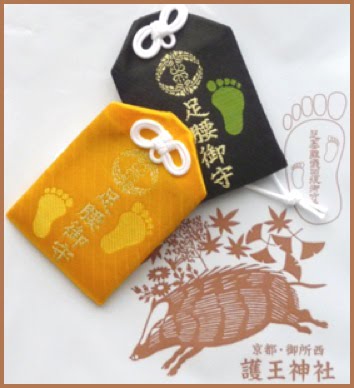
for strong legs 健脚お守り (in three colors)


for strong feet 足の袋お守り


for strong koshi - hips 勝歩(しょうぶ shoobu)お守り
shoobu - to walk safely
a pun on winning a fight

From shrine Go-Oo Jinja 護王神社 Kyoto
source : Gooujinja
Goo Shrine


quote
Goo Shrine (pronounced Go-oh,)
enshrines Lord Wake no Kiyomaro, who, in the year 769, blocked the scheme of Yuge no Dokyo, an evil Buddhist priest, to usurp the imperial throne. But Dokyo exiled Lord Kiyomaro to the present-day Kagoshima Prefecture, and on the way ambushed him and wounded him in the leg.
Kiyomaro made his way to the present Oita Prefecture, where nearly 300 wild boars protected him from his pursuers and escorted him to Usa Hachiman Shrine, where his injuries were miraculously cured.
To this day the Goo Shrine is visited by sufferers of leg and foot injuries, who believe the visit will relieve their injuries.

The shrine, across the street from the Imperial Palace grounds, displays numerous boar images, and a stone block bearing footprints which are said to heal injuries.
source : www.tripadvisor.com

::::::::::::::::::::::::::::::::::::::::::::::::::::::::::::::::::::::::::::::::::::::::::::::::::::::::::::::::::::::::::::::::::::::::::::::::::::::::::::::::::::::::::: 


. Fujishiro Jinja 藤白神社 Fujishiro shrine .
The first shrine on the main road to Kumano in Wakayama . . . from here the pilgrim needs strong legs !

:::::::::::::::::::::::::::::::::::::::::::::::::::::::::::::::::::::::::::::::::::::::::::::::::::::::::::::::::::::::::::::::::::::::::::::::::::::::::::::::::::::::::::  


hiza no itami 膝の痛み amulets for hurting knees


source : ameblo.jp/joining-dream

from Ise Shrine - もちゆりひきよせのパワー 伊勢


from Kiyomizu, Otowa, Kyoyo - 清水 京都


:::::::::::::::::::::::::::::::::::::::::::::::::::::::::::::::::::::::::::::::::::::::::::::::::::::::::::::::::::::::::::::::::::::::::::::::::::::::::::::::::::::::::::


. . . CLICK here for Photos !

. Reference .


::::::::::::::::::::::::::::::::::::::::::::::::::::::::::::::::::::::::::::::::::::::::::::::::::::::::::::::::::::::::::::::::::::::::::::::::::::::::::::::::::::::::::: 

kenkyaku 健脚守り strong legs, health for the legs

quote
Enju-ji temple, Tokyo 延寿寺 - 日荷堂

Enju-ji’s Nichika-do enshrines Saint Nichika, known as the ‘God of Strong Legs'. Legend has it that Saint Nichika walked for three days and three nights from Kanazawa, Yokohama, to the head temple of Nichiren Buddhism on Mt. Minobu in Yamanashi, carrying statues of two kongo rikishi guardians (also known as Nio). The temple was founded around 350 years ago, in the time of the fourth shogun, Tokugawa Ietsuna.

In the shrine you can see wooden ema plaques with traditional footwear fixed to them, and it’s not hard to imagine how important kenkyaku (strong legs) must have been in times when travel on foot was the norm. The charms, which say ‘Kenkyaku Omamori’, come in red, purple and green, and cost 1,500 yen. After you’ve successfully completed your race, you can take the omamori back to the temple and have them put it on a ritual fire in the takiage ceremony.
source : www.timeout.jp


. 深川不動堂 Fukagawa Fudo Hall .
with waraji no omamori わらじお守り straw sandal amulets


CLICK for more waraji straw sandal amulets.


. waraji 草鞋 zoori 草履 straw sandals and amulets .

. 四国お遍路さん Henro Pilgrims in Shikoku .
They used a lot of waraji amulets.

:::::::::::::::::::::::::::::::::::::::::::::::::::::::::::::::::::::::::::::::::::::::::::::::::::::::::::::::::::::::::::::::::::::::::::::::::::::::::::::::::::::::::::


ashi no kamisama to hotokesama 足の神様 仏様
more deities and Buddhas for healthy legs


ashigamisan 足神さん Ashi no Kamisama in Uji

. ashigamisan 足神さん Ashi no Kamisama - Uji Jinja 宇治神社 .
Ise, Ujiyamada, Mie

..............................................................................................................................................


Daianraku Ji 大安楽寺 Daianraku-Ji, Dai-Anraku-Ji
長野県松本市女鳥羽2丁目5−8 - Nagano

founded by . Gyōki 行基菩薩 Gyoki Bosatsu .
(668-749 AD)
In the North-eastern (unauspicious) direction, to protect Matsumoto castle. It used to be simply called "Anraku-Ji", but during the Edo period, the lord of the castle built a kind of local university (gakumonjo 学問所) in the temple compound. In 1922 it was named as Great Anraku-Ji.


At the entrance gate, 山門, people hung their straw sandals, to warm the bare feet of the deity Nio-O in the gate.

- - - HP of the temple :
- source : oowarazi-daianrakuzi

..............................................................................................................................................


Daikoku Sha 大国社 - Yano no Gongen 与野のごんげん
埼玉県さいたま市(旧与野市)- Saitama


- source and more photos : ameblo.jp/notodesign/entry

The torii gate is placed on high podests, to imitate the high geta of the mountain ascetics.

Daikoku is seen as a wanderer thoughout Japan, and straw sandals are hung at the gate.
Not only for strong legs, but for a strong "base and fundament" in our lives.

- source : kaiunspot.seesaa.net

. Daikoku Ten 大黒天 Mahakala .


..............................................................................................................................................


. Hakusan Guu Ashioo Sha 白山宮足王社 Hakusan shrine and Ashi-O Shrine .
愛知県日進市本郷町宮下519番地 - Aichi

Ashinazuchi no kami 足名椎神(あしなづちのかみ) - (アシナヅチ)

..............................................................................................................................................


. Hirai Jinja 飛来神社 .
福岡県福岡市博多区吉塚3丁目11番地(旧 東堅粕)- Fukuoka

Sukunahikona no mikoto 少彦名命 Sukuna Hikona, Sukuna-Hikona

..............................................................................................................................................


Tokumochi Jinja 徳持神社 (Hachiman sama 八幡さま)
東京都大田区池上三丁目38-17, Tokyo, Ikegami

ー deities in resicence

. Hondawake no Mikoto 誉田別命 . - protector of Japanese Martial Arts budoo 武道 - Homudawake

Uka no Mitama no Mikoto 宇迦之御魂命


Tokumochi Taro is venerated.

TBA

..............................................................................................................................................

ishibotoke (sekibutsu) 石仏 Stone Buddha

In 志摩町 Shima Town
there is a stone Buddha, also called shiobotoke 潮ボトケ "Tidal Buddha" or nurebotoke ぬれボトケ "Wet Buddha".
In the early Meiji period, the 弥吉老人 Old Man Yakichi had a special dream:
"I am the Jizo Bosatsu of this place. By a turn of fate I arrived here at this place. If someone prays to me with all their heart, I will heal any illness they have from the hips down to the feet.
I will sleep in the sea water and thus help to cleanse the sins of the people, so do not replace my stone to a higher place."
The head priest 児玉芳山 Kodama Yoshiyama of the temple 潮音寺 Choon-Ji in Shima decided to have a hospital here.
. Ise-Shima 伊勢志摩 と伝説 Legends about Ise-Shima .

::::::::::::::::::::::::::::::::::::::::::::::::::::::::::::::::::::::::::::::::::::::::::::::::::::::::::::::::::::::::::::::::::::::::::::::::::::::::::::::::::::::::::: 

- tba

ビリケンさん【大阪府大阪市】 Biriken in Osaka
足長神社・手長神社【長野県諏訪市】 Ashinaga Jinja
全性寺 【石川県金沢市】 Zenshooji Kanazawa
稲足神社【東京都あきる野市】 Inatari Jinja, Ueno
世田谷観音【東京都世田谷区】 Setagaya Kannon, Tokyo
あらはばき神社【宮城県多賀城市】 Arahabaki jinja, MIyagi, Tagajo
与太郎神社【岡山県玉野市】 Yataro Jinja, Okayama
大宮氷川神社【埼玉県さいたま市】 Oomiya Hikawa Jinja, Saitama
和気神社(足立寺史跡)【京都府八幡市】 Wake Jinja, Kyoto
品川神社【東京都品川区】 Shinagawa Jinja, Tokyo


:::::::::::::::::::::::::::::::::::::::::::::::::::::::::::::::::::::::::::::::::::::::::::::::::::::::::::::::::::::::::::::::::::::::::::::::::::::::::::::::::::::::::::  


椎茸を干して足腰強くなる
shiitake o hoshite ashi koshi tsuyoku naru

I dry some
shiitake mushrooms -
my legs get stronger


Saito Takako 佐藤孝子 (Saitoo)


statue at the temple Gusho-Ji (Guushooji 宮昌寺). Gunma : 椎茸典座 Shiitake Tenzo
The old cook of the temple drying shiitake.


. WKD : shiitake 椎茸 Pasania mushroom .
and the full story of
Zen Master Dogen and the Tenzo Cook drying shiitake mushrooms


:::::::::::::::::::::::::::::::::::::::::::::::::::::::::::::::::::::::::::::::::::::::::::::::::::::::::::::::::::::::::::::::::::::::::::::::::::::::::::::::::::::::::::

. Health Amulet 健康御守 kenkoo omamori .
kenkyaku 健脚守り strong legs, health for the legs


. Regional Folk Toys from Japan .


. Tohoku after the BIG earthquake March 11, 2011

[ . BACK to WORLDKIGO . TOP . ]
[ . BACK to DARUMA MUSEUM TOP . ]
- #ashikoshi #koshi #stronglegs -
:::::::::::::::::::::::::::::::::::::::::::::::::::::::::::::::::::::::::::::::::::::::::::::::::::::::::::::::::::::::::::::::::::::::::::::::::::::::::::::::::::::::::::

Kanai Anzen

[ . BACK to DARUMA MUSEUM TOP . ]
. yakuyoke 厄除け warding off evil - Index .
::::::::::::::::::::::::::::::::::::::::::::::::::::::::::::::::::::::::::::::::::::::::::::::::::::: 


Kanai anzen 家内安全 "peace at home"
wellbeing for the family


kazoku omamori 家族お守り family protection
. . . CLICK here for Photos !

kaun takamori, ka-un takamori 家運隆盛 good luck for the family
. . . CLICK here for Photos !


quote
... a type of omamori, or Japanese amulet of the Shinto religion. Its purpose is to promote good health and to help those with illnesses and protect the family.

Literally, kanai anzen means
"Please keep my family from harm,"
and you can see this written upon ema votive plaquets as well as omamori suzu (bells). In the form of an omamori and suzu, this prayer is carried on one's person.
© More in the WIKIPEDIA !


. . . CLICK here for Photos !


. Kanai Anzen from this BLOG


. Kanai Anzen Daruma Kokeshi だるまこけし .

:::::::::::::::::::::::::::::::::::::::::::::::::::::::::::::::::::::::::::::::::::::::::::::::::::::

壷阪寺 Tsubosaka dera, Nara

quote
Mayoke men - Demons to ward off evil


開運厄除 ・家内安全 魔除面 ward off evil
鬼門を守る、kimon - unlucky quarter
眼病退散 eyes、
トイレでこけない toilet
厄年退散 unlucky year

桃鬼…良縁成就・夫婦円満 couple
黄鬼…金運招来・財運向上 money
赤鬼…開運厄除・家内安全 family
青鬼…開運厄除・家内安全 family
緑鬼…学業成就・無病息災 health

also available at this temple

大草鞋魔除面(おおわらじまよけめん)
眼のお守り me no omamori


omou tsubo 思う壷守 "may all things go just as I want it"


Fudo Myo-o to ward off all evil 不動明王


壷阪寺 Tsubosaka dera, Nara
〒635-0102 奈良県高市郡高取町壷阪3番地(お里沢市の霊蹟)

source : Tsubosaka dera Homepage


. Oni 鬼 Demon Amulets .

. Minami Hokkeji 壷阪寺 Tsubosakadera .

::::::::::::::::::::::::::::::::::::::::::::::::::::::::::::::::::::::::::::::::::::::::::::::::::::: 


門の梅家内安全と咲にけり
kado no ume kanai anzen to saki ni keri

plums at the gate
praying for the well-being of the family
with their blossoms . . .

Tr. Gabi Greve

. WKD : Kobayashi Issa 小林一茶 in Edo .

This hokku has the cut marker KERI at the end of line 3.


a plum tree blooms
by the gate, protecting
the family from harm

Tr. Chris Drake

This hokku was written in the 2nd month (March) of 1816, when Issa was living back in his hometown. In Issa's diary there is no headnote, but in some later versions a headnote is attached: "Congratulations on your new house." The language indicates that Issa is sending felicitations to someone who has just moved into a new house. Apparently Issa later used this hokku to congratulate someone else.

In Issa's time epidemics, disasters, and early death were more common than today, and people often made prayers at shrines and temples in order to protect family members against sickness, accidents, and other harm. Amulets that claimed to be able to ensure family wellness and safety were also extremely popular. Issa, however, looks not to amulets but to the vigorous blooming of a plum tree by the gate of one house. The strength or perhaps the ki, the spiritual energy, of the healthy, robustly blooming tree, the hokku suggests, will surely help the family living in the house avoid illness and harm and live long, happy lives.

Chris Drake


::::::::::::::::::::::::::::::::::::::::::::::::::::::::::::::::::::::::::::::::::::::::::::::::::::: 


. Kanai Anzen from this BLOG


[ . BACK to WORLDKIGO . TOP . ]
[ . BACK to DARUMA MUSEUM TOP . ]

- #kanaianzen #family -
::::::::::::::::::::::::::::::::::::::::::::::::::::::::::::::::::::::::::::::::::::::::::::::::::::: 

10/27/2011

Shobai Hanjo and Money

[ . BACK to DARUMA MUSEUM TOP . ]
::::::::::::::::::::::::::::::::::::::::::::::::::::::::::::::::::::::::::::::::::::::::::::::::::::::::::::::::::::::::::::::::::::  

Shoobai Hanjoo 商売繁盛 good business

kinun, kin un 金運お守り to make money
. . . kinun shoorai 金運招来
zaiun koojoo 財運向上 make more money

akinai mamori 商い守り protect business


The Deity EBISU is a good helper on the way!
. Ebisu 夷 恵比寿 恵比須 えびす、エビス .


Everyone wants to become a rich person and suceed in business.

Here is the first go, with Daruma as your mentor.

. Akinai mamori 商い守 for good business .
It brings a thousand visitors to the store 千客万来.
On the beautiful silken black bag the Chinese character for Business 商 is emproidered. kuroji 黒生地 black material, is a pun with "black figures" 黒字 in the balance book.
Shiba Daimyoojinguu 芝大神宮 Tokyo, Shiba Daimyojin Shrine


. Hanjo Daruma 繁盛ダルマ .


. Kanemochi Daruma 金持ちだるま "Rich Man Daruma" .


. Masumasu 升々 measuring cup with Daruma .
fukumasu, fuku masu 福枡 auspicious masu
益々福が増す升 -masumasu fuku ga masu masu


::::::::::::::::::::::::::::::::::::::::::::::::::::::::::::::::::::::::::::::::::::::::::::::::::::::::::::::::::::::::::::::::::::


. kinun Jizoo 金運地蔵 Kin-Un Jizo for Money .
- - - - - 金福地蔵 Kinpuku Jizo for Luck with Money
- - - - - 銭塚地蔵尊 Asakusa Zenizuka Jizo - かんかん地蔵 Kankan Jizo


::::::::::::::::::::::::::::::::::::::::::::::::::::::::::::::::::::::::::::::::::::::::::::::::::::::::::::::::::::::::::::::::::::  

fukuzeni, fuku zeni 福銭 auspicious coin


The 5 yen coin 五円 with a hole in the middle is good for
go-en ga aru  五円 / ご縁 to be bound to good fortune and money


from Zeni-arai Benten in Kamakura

gozaisen go saisen 御賽銭 honorable offering money


:::::::::::::::::::::::::::::::::::::::::::::::::::::::::::::::::::::::::::::::::::::::::::::::::::::::::::::::::::::::::::::::::::: 


kane no naru ki 金の成る木 a tree to become rich


with Daikoku sama 大黒


(click for more samples)
from temple Saijooji 最乗寺 Saijo-Ji in Kanagawa 神奈川県南足柄市大雄町


kane ni naru ki 金に成る木 - a tree to become rich
. ema 絵馬 votive tablets .


:::::::::::::::::::::::::::::::::::::::::::::::::::::::::::::::::::::::::::::::::::::::::::::::::::::::::::::::::::::::::::::::::::: 


shoobai hanjoo 商売繁盛 お守り


. . . CLICK here for Photos !

. Reference .

:::::::::::::::::::::::::::::::::::::::::::::::::::::::::::::::::::::::::::::::::::::::::::::::::::::::::::::::::::::::::::::::::::: 


. Entries with MONEY .

. Entries with BUSINESS .


. Regional Folk Toys from Japan .


. Tohoku after the BIG earthquake March 11, 2011

[ . BACK to WORLDKIGO . TOP . ]
[ . BACK to DARUMA MUSEUM TOP . ]

::::::::::::::::::::::::::::::::::::::::::::::::::::::::::::::::::::::::::::::::::::::::::::::::::::::::::::::::::::::::::::::::::::

10/26/2011

Onegai Jizo

[ . BACK to DARUMA MUSEUM TOP . ]
:::::::::::::::::::::::::::::::::::::::::::::::::::::::::::::::::::::::::::::::::::::::::::::::::::::::::::::::::::::::::::::::::::::::::::::::::::::::::::::::::::::::::::  


Onegai Jizoo お願い地蔵 Jizo to make a wish
o-negai Jizo Bosatsu

Wish-granting Jizo. Jizo to ask a favor.


You buy a small statue of a Jizo, make your wish and place it near the big statue in the temple.
Many parents or grandparents buy these small Jizo and make a wish for their children or grandchildren, since Jizo is a special protector of the children.


quote
from 新井薬師(梅照院薬王寺)
Arai Yakushi (Baishoin Yaku-ouji Temple)


Onegai Jizou
source : I.HATADA


From this temple:

. meme ema めめ絵馬鈴守 amulet for the eyes .


:::::::::::::::::::::::::::::::::::::::::::::::::::::::::::::::::::::::::::::::::::::::::::::::::::::::::::::::::::::::::::::::::::::::::::::::::::::::::::::::::::::::::::  


o-Jizoo Chan お地蔵ちゃん dear little Jizo

Make a wish and poor water over this little Jizo. It will slowly dissolve to sand.
The chrystal / crystal which will be left over is your amulet to keep.
If it sends off many rays of light, your wishes will be fulfilled and your happiness increase.

Jizo with a chrystal / crystal 水晶付.

source : www.hamanako.com...


::::::::::::::::::::::::::::::::::::::::::::::::::::::::::::::::::::::::::::::::::::::::::::::::::::::::::::::::::::::::::::::::::::::::::::::::::::::::::::::::::::::::::: 


がんばろ東北 Ganbaro Tohoku !
This one is a little kokeshi of 8 cm to pray for Tohoku after the big earthquake.
It comes in different types of wood.
source : art.honeycomb.gr.jp


:::::::::::::::::::::::::::::::::::::::::::::::::::::::::::::::::::::::::::::::::::::::::::::::::::::::::::::::::::::::::::::::::::::::::::::::::::::::::::::::::::::::::::  


quote
Littéralement, le "Jizô des vœux".
Dans de nombreux temples, les visiteurs peuvent acheter des petites images de Jizô, qu'ils déposent autour de la statue principale de Jizô quand ils le prient pour de l'aide. C'est probablement une extension de la tradition Sentai Jizô (1.000 Jizô).
Le temple Nihonji Daibustu à Nokogiriyama à Chiba construit en 1780 regroupe une statue géante de Bouddha et de Kannon mais est aussi dédié au Jizô des vœux.


source : le-jizo-en-colere.over-blog.co


:::::::::::::::::::::::::::::::::::::::::::::::::::::::::::::::::::::::::::::::::::::::::::::::::::::::::::::::::::::::::::::::::::::::::::::::::::::::::::::::::::::::::::   


There are quite a few big and small Onegai Jizo in Japan.


Take a look at more here:
. . . CLICK here for Photos !


. Jizoo Bosatsu (Kshitigarbha) 地蔵菩薩 .


::::::::::::::::::::::::::::::::::::::::::::::::::::::::::::::::::::::::::::::::::::::::::::::::::::::::::::::::::::::::::::::::::::::::::::::::::::::::::::::::::::::::::: 


onegai Kannon お願い観音 Kannon Bosatsu to grant a wish

. . . CLICK here for Photos !

............................................................................................................................................


. Onegai Fudoo おねがい不動さま / お願い不動
Onegai Fudo Sama - Fudo to make a wish .


::::::::::::::::::::::::::::::::::::::::::::::::::::::::::::::::::::::::::::::::::::::::::::::::::::::::::::::::::::::::::::::::::::::::::::::::::::::::::::::::::::::::::: 


gankake Jizo 願掛け地蔵 to make a wish
. Gankake 願掛け wish-prayer, to make a wish .


. Regional Folk Toys from Japan .


. Tohoku after the BIG earthquake March 11, 2011

[ . BACK to WORLDKIGO . TOP . ]
[ . BACK to DARUMA MUSEUM TOP . ]
::::::::::::::::::::::::::::::::::::::::::::::::::::::::::::::::::::::::::::::::::::::::::::::::::::::::::::::::::::::::::::::::::::::::::::::::::::::::::::::::::::::::::: 

10/21/2011

Kaichu Inari Shrine

[ . BACK to DARUMA MUSEUM TOP . ]
:::::::::::::::::::::::::::::::::::::::::::::::::::::::::::::::::::::::::::::::::::::::::::::::::::::::::::::::::::::::::::::::::::: 


Kaichu Inari Shrine 皆中稲荷神社
東京都新宿区百人町1丁目11−16 Tokyo


http://kaichuinari-jinja.or.jp/

Once upon a time there was a region called Okubo 大窪 in the Musashi plain. Descendants from the Ise Shrine called Oshi 御師 settled there and soon built a shrine (around 1533).
More people settled and a town grew around the shrine.

Later the Tokugawa Shogunate declared this under their protection and established the gunmen's group (teppotai 鉄炮隊). They practised from morning to evening and would eventually never miss the aim (100 shots, 100 hits 百発百中).

Amulets from this shrine prevented people from becoming food poisoning (a common illness during the old times without refrigerator).

kitsuke nan de mo ataru きつけ(狐)何でも当たる、
また百発百中を的中と言うので願い事は何でも落としてくれる神社として奉られ、いつしか「みなあたる」神社が皆中神社として、願うと食べ物に困らない、食中り食下しにならない、そしてお米や野菜の出来が良くなる事などから「御食饌神(みけつかみ miketsu kami)」、そしていつも狐がよく出入りする事などから、ある占い師が
「これは異なる神様だ」「これは稲なる神様だ」と言ったことから、異なる神→稲なる神として稲の神、稲荷神社と付けその内に「何事も当たる神様」から皆中稲荷神社へと名前が呼ばれるようになったとの事です。
そして新しく御宮を建て鎮座した日が、奇しくも9月27日に当たっていたのは偶然だとの事です。
source : kaichuinari-jinja.or.jp/history

:::::::::::::::::::::::::::::::::::::::::::::::::::::::::::::::::::::::::::::::::::::::::::::::::::::


quote
Annual Festival of Kaichu Inari Shrine
Annual Festival of Kaichu Inari Shrine, Hyakunincho, Shinjuku-ku.
The highlight of the festival is a parade of
Teppo Hyakunintai
(100 sharpshooters of the Edo period) and a demonstration of their shooting. They start from the Shrine at 10 am, stopping by Okubo-dori (street), Otakibashi-dori, Shokuan-dori, Nishi-Toyama Elementary School, Hyakunin-cho 3-chome, Nishi-Toyama-Koen (park), and then come back to the Shrine at 2:10 pm.
source : www.wattention.com


鉄砲組百人隊 100 shooters


. Hyakuninchoo 百人町 Hyakunincho district .
Aoyama, Shinjuku
Home of the
teppoogumi hyakunin tai 鉄砲組百人隊 100 Riflemen Team
lived here on orders of Tokugawa Ieyasu.
Hyakunin (hundred-man) brigade of shooters

kaichuu 的中 is a pun with "hitting the target", which was so important for the gun soldiers.

- - - Deity in residence
Ukanomitama no Ookami 宇迦之御魂大神

Yearly Festival : September 27

 天文二年(1533)九月二十七日武蔵国に鎮座以来約四百二十有余年になり、大久保発祥以来総社として鎮際せられた。皆中の稲荷と称され、さらに、鉄砲の射撃が百発百中で当たり、射撃のみではなく願い事もと参詣者の数も増え、ついには皆中稲荷神社と崇敬されるようになった。

Kaichuinari-jinja Shrine
- reference : tokyo-jinjacho.or.jp/syouka -


. Ukanomitama no Ookami 宇迦之御魂大神 .

:::::::::::::::::::::::::::::::::::::::::::::::::::::::::::::::::::::::::::::::::::::::::::::::::::::::::::::::::::::::::::::::::::: 


Amulets from this shrine:


kinun kaeru omamori 金運かえる御守 may money come back


御守護ステッカー sticker for protection


VICTORY Hoshi no omamori 星のお守り star amulet for victory


的中宝くじお守り to win in the takarakuji lottery
More lottery amulets :
. lottery ticket, takarakuji 宝くじ  .


福寄せ守 luck comes your way
仕事守 to protect your work

and many more are here

source : kaichuinari-jinja.or.jp. omamori

:::::::::::::::::::::::::::::::::::::::::::::::::::::::::::::::::::::::::::::::::::::::::::::::::::::::::::::::::::::::::::::::::::: 


CLICK for more ema 絵馬


. Reference .


:::::::::::::::::::::::::::::::::::::::::::::::::::::::::::::::::::::::::::::::::::::::::::::::::::::::::::::::::::::::::::::::::::: 

. Regional Folk Toys from Japan .


. Tohoku after the BIG earthquake March 11, 2011

[ . BACK to WORLDKIGO . TOP . ]
[ . BACK to DARUMA MUSEUM TOP . ]

::::::::::::::::::::::::::::::::::::::::::::::::::::::::::::::::::::::::::::::::::::::::::::::::::::::::::::::::::::::::::::::::::::

Musha ningyoo INFO

[ . BACK to DARUMA MUSEUM TOP . ]
::::::::::::::::::::::::::::::::::::::::::::::::::::::::::::::::::::::::::::::::::::::::::::::::::::::::::::::::::::::::::::::::::::  


Musha ningyoo 武者人形 Samurai Dolls
kigo for early summer

They are decorated for the Boy's Festival on May 5.
warrior dolls


source : kayoyoga-hari-om

more kigo:

kabuto ningyoo かぶと人形(かぶとにんぎょう)
"helmet decorations"
gogatsu ningyoo 五月人形(ごがつにんぎょう)
dolls of the fifth lunar month
ayame ningyoo あやめ人形(あやめにんぎょう)"iris dolls"
..... shoobu ningyoo 菖蒲人形 (しょうぶにんぎょう)

bugu kazaru 武具飾る(ぶぐかざる)decorating samurai armour


. Boys' Festival (tango no sekku) .

Families with little boys observe this festival.
The dolls show historical figures in famous scenes or just a set of armour.
Reading the old warrior tales (gunki monogatari 軍記物語) was another pastime on this day.

Also decorated for the Boy's Festival are the
. Carp Streamers (koinobori 鯉幟) .

:::::::::::::::::::::::::::::::::::::::::::::::::::::::::::::::::::::::::::::::::::::::::::::::::::::::::::::::::::::::::::::::::::: 


quote
Text by Alan Pate, L'Asie Exotique

The term Musha Ningyô generally translated as "warrior dolls," refers to the elaborately costumed figures displayed on May 5th for the Boy's Day festival; they feature great figures and heroic episodes from Japan's martial past. Stories about these figures told by older people to young males instilled ethics and values, and passed on heritage and pride in the past.

For Westerners who know Boy's Day only through hand-tinted images or through the dolls found periodically in antique stores, the doll is pretty much the whole story; beautiful, an exquisite accent piece for our home. We respond to the beauty of the figures and admire the rich silk brocades. We marvel at the skilled craftsmen who created images so infused with life. We delight in the whiteness of the gofun (burnished oyster shell and rice paste) which give their faces that particular porcelaneous look.

But we are left untouched by the awe or pathos they were intended to evoke, emotions directly tied to the life and times for which these dolls serve only as a symbol. For the Japanese child, however, the doll was just the entry-point, the beginning of the journey to a time and a place where heroes lived and legends were made.

To us it is remote or unreal. Medieval Japan, the invasions of Korea, the conflicts between the Minamoto and the Taira clans are the stuff of foreign romance and legend, a TV mini-series.

But in Japan it is one of the well-springs from which the national character is drawn. The dolls provide an image on which to anchor what is heard and read. They symbolize and testify to the conflicts in Japanese history which helped create a culture unique in this world.
...

History
Boy's Day traces its roots deep into Japanese history, combining esteem for martial success and bravery with an underlying supernatural context which typified the five principal feast days called gosekku. A closer look at the history of Boy's Day and the development of its symbology helps to pierce the veil that hides the deeper layers of meaning behind the stoic features and beautiful costumes of the musha-ningô.

The history of the festival spans some 1400 years, with earlier antecedents in China, but the pattern of development lends itself to three divisions:

(1) Early period, covering the origins of the festival and its symbols from the 5th century to the beginning of the 17th century, a time when the festival was more ambiguous in form, not tied so closely with children, but was more a day set aside for revelling in martial prowess and purging evil from oneself and the world.

(2) The Edo period (1603-1868) witnessed in its early years an increasing focus on children and a gradual abstraction of the martial and spiritual symbols combined with the rapid development of the dolls and display images which we have come to associate with the festival.

(3) The Meiji period (1868-1912), the enthronement of Mutsuhito and restoration of the emperor as the locus of power resulted in politicization of the musha-ningyô characters from history were stressed who were loyal to the emperor or added glory to the office.

Boys' Day display elements (kazari)
reflect the dual emphasis on the idealized martial and the talismanic spiritual. Fukinagashi (streamers) were military banners and pennants whose fluttering ends drove away evil. Kabuto, the distinctive battle helmet was believed to protect a house against evil and often made of spiritwarding iris leaves to further its talismanic effect. Musha-ningyô were heirs to the talismanic tradition: dolls were seen as substitutes (katashiro), diverting evil away from the child and revered for their protective powers.

Empress Jingu and Takenouchi no Sukune
Another principal musha-ningyô is a character from Japan's remote history: Empress Jingu (170-269). The only female figure regularly associated with Boy's Day, she is paired with her faithful minister/ general Takenouchi no Sukune. The Nohongi (compiled in 720) states that her husband, Chuai Ten'no the 14th emperor of Japan, died just prior to invading Korea. Debate over the invasion had been strong and Jingu had been an ardent supporter.

MORE
source : www.lasieexotique.com


:::::::::::::::::::::::::::::::::::::::::::::::::::::::::::::::::::::::::::::::::::::::::::::::::::::::::::::::::::::::::::::::::::: 


Clay Bells 土鈴


:::::::::::::::::::::::::::::::::::::::::::::::::::::::::::::::::::::::::::::::::::::::::::::::::::::::::::::::::::::::::::::::::::: 


. . . CLICK here for musha ningyoo Photos !

. Reference .


Click on the images for more photos.


kabuto ningyoo かぶと人形 "helmet decorations"


gogatsu ningyoo 五月人形 May Dolls


ayame ningyoo あやめ人形 iris dolls
Here we have Kintaro, the Strong Boy, ridind on a carp,


. Kintaro 金太郎 the Strong Boy Kintoki .


source : rakuten.co.jp/corazon

Kintaro and Kabuto Kun かぶと君 "The Helmet Boy"
Usaburo Kokeshi 卯三郎こけし

..................................................................................................................................................................


. shoobu taichi 菖蒲太刀 iris sword .
from Konosu town, Saitama


. yoroi 鎧 armour, armor of a samurai .
gusoku 具足 armour
..... kogusoku 小具足 smapp pieces of armour equipment (like facemask, forearm sleeves, thigh guards, shin guards, bear-fur boots
and haiku by Yosa Buson 与謝蕪村 


:::::::::::::::::::::::::::::::::::::::::::::::::::::::::::::::::::::::::::::::::::::::::::::::::::::::::::::::::::::::::::::::::::: 


- - - regional musha ningyoo 武者人形 samurai dolls


Kagawa, Takamatsu 香川県 高松市


source : www008.upp.so-net.ne.jp

also called yoroi ningyoo 鎧人形 or deko でこ head dolls.
The head of clay is stuck on a long bamboo pole, which is stuck through the armour.
The head may feature a famous samurai, like Kato Kiyomasa or Toyotomi Hideyoshi.
Both armes are supported by a bamboo stick and can be moved around freely.
These dolls have been made offerings to the local shrines to pray for the healthy upbringing of a baby boy.
Nowadays they are a favorite souvenir.


Ehime, Matsuyama 愛媛県 松山市


source : ocn.ne.jp/~shikisai


::::::::::::::::::::::::::::::::::::::::::::::::::::::::::::::::::::::::::::::::::::::::::::::::::::::::::::::::::::::::::::::::::::


source :rakuten.co.jp/smilemarket

Musha Daruma 武者だるま


:::::::::::::::::::::::::::::::::::::::::::::::::::::::::::::::::::::::::::::::::::::::::::::::::::::::::::::::::::::::::::::::::::: 

. Boys' Festival (tango no sekku 端午の節句) .


. Regional Folk Toys from Japan .


. Tohoku after the BIG earthquake March 11, 2011

[ . BACK to WORLDKIGO . TOP . ]
[ . BACK to DARUMA MUSEUM TOP . ]

::::::::::::::::::::::::::::::::::::::::::::::::::::::::::::::::::::::::::::::::::::::::::::::::::::::::::::::::::::::::::::::::::::