- - ABC-INDEX - -

Showing posts with label harvest. Show all posts

3/07/2012

Kamitsubame paper lark

[ . BACK to DARUMA MUSEUM TOP . ]
::::::::::::::::::::::::::::::::::::::::::::::::::::::::::::::::::::::::::::::::::::::::::::::::::::::::::::::::::::::::::::::::::::  


Kami tsubame 紙つばめ paper lark


source : www.gs.kunitachi.ac.j

This lark made from strong paper had a tail that gave a sound when spinning around.
It was placed in the fields to prevent insects from harming the vegetables.
The body of the animal is black with white stripes.
The body is stabilized by a bamboo skewer.

It is sold on the festival days of the famous
temple Jakkooin 寂光院 Jakko-In.

In former times, farmers would buy 10 or 20 to place in the rice paddies.
The swallow was seen as a messenger of the deity of the rice fields.


. Jakkoin 寂光院 Jakko-In- Inuyama .

:::::::::::::::::::::::::::::::::::::::::::::::::::::::::::::::::::::::::::::::::::::::::::::::::::::::::::::::::::::::::::::::::::: 


To visit
Daizuigu Bosatsu 大随求菩薩

nanatsuki mairi 七月参り visiting 49 times
visiting to pray on the same day for seven consequent months
and repeat it for seven years, altogether 49 visits to the temple

This pilgrimage works as different talisman for different people

若人には 学業成就・試験合格・良縁成就 for young people
男性には 厄除開運・家内安全 for men
女性には 安産・子育・心願成就 for women
熟年には 生涯現役・一病息災・ボケ封じ for the elderly

.................................................................................


source : thikuenn

Yakuyoke Senju Kannon 厄除千手観音 Kannon Bosatsu
to ward off evil with 1000 arms.
She is a secret statue shown every 60 years

Tsugao Kannon 継鹿尾観音

.................................................................................


Binzuru sama 賓頭盧尊者 a statue to rub,
first the statue and than the painful part of your own body.


omamori kaado 御守りカード amulet card


Homepage of the temple
愛知県犬山市継鹿尾山 Tsugao Town
source : www.jakkoin.com...


:::::::::::::::::::::::::::::::::::::::::::::::::::::::::::::::::::::::::::::::::::::::::::::::::::::::::::::::::::::::::::::::::::: 


Daizuigu Bosatsu 大随求菩薩(だいずいくぼさつ)
Mahā-pratisarā, Maha pratisara


a deity of the esoteric Buddhism.
In her female version she is the consort of Vairocana or seen as an incarnation of Kannon Bosatsu.
Also seen as the mother womb of all things.
She is said to be the mother of Gautama Buddha.

She can grant any wish to come true.


© More in the WIKIPEDIA !


Zuigudoo 随求堂 Zuigu-Do hall
tainai meguri 体内めぐり

At the temple Kiyomizudera 清水寺 in Kyoto is a famous womb-stone that you can circumambulate in complete darkness to have a wish granted.
. . . CLICK here for Photos !


:::::::::::::::::::::::::::::::::::::::::::::::::::::::::::::::::::::::::::::::::::::::::::::::::::::


Another temple named Jako-In
京都市左京区大原草生

. Shibazuke pickles and Jako-In at Ohara, Kyoto 寂光院 .


:::::::::::::::::::::::::::::::::::::::::::::::::::::::::::::::::::::::::::::::::::::::::::::::::::::::::::::::::::::::::::::::::::: 


. . . CLICK here for Photos !

. Reference .


. kami 紙 paper art and craft  .


:::::::::::::::::::::::::::::::::::::::::::::::::::::::::::::::::::::::::::::::::::::::::::::::::::::::::::::::::::::::::::::::::::: 


. WKD : Swallow (tsubame 燕, 乙鳥, 玄鳥, 天女) .

. Binzuru 賓度羅跋羅惰闍 Bindora Baradaja .


. Regional Folk Toys from Japan .


. Tohoku after the BIG earthquake March 11, 2011

[ . BACK to WORLDKIGO . TOP . ]
[ . BACK to DARUMA MUSEUM TOP . ]

::::::::::::::::::::::::::::::::::::::::::::::::::::::::::::::::::::::::::::::::::::::::::::::::::::::::::::::::::::::::::::::::::::

11/06/2011

Ninomiya Shrine Kobe

[ . BACK to DARUMA MUSEUM TOP . ]
::::::::::::::::::::::::::::::::::::::::::::::::::::::::::::::::::::::::::::::::::::::::::::::::::::::::::::::::::::::::::::::::::::  


Ninomiya Jinja 二宮神社 Shrine Ninomiya
兵庫県神戸市中央区二宮町3丁目1-12

This shrine is closely connected to Ikuta Jinja 生田神社 and
Nagata Shrine 長田神社 in Kobe .
Empress Jingu Kogo payed a visit to this shrine in 201.

. Empress Jinguu Koogoo 神功皇后 and Kobe .


It is one of the "Eight shrines of Kobe" 神戸八社 Kobe Hachimiya meguri
港神戸守護神厄除八社巡拝

All the shrines specialize in some kind of warding off evil, counting from
Ichinomiya to Hachinomiya.

一宮神社 Ichinomiya
田心姫命 素盞鳴尊の子で宗像三神のひとり
交通安全、縁結び、商売繁盛
traffic safety, good partners, good business

二宮神社 Ninomiya
天之忍穂耳命 天照大神の長男で瓊瓊杵尊の父にあたる皇室直系神
勝運・金運上昇、病気平療
winning, money, health

三宮神社 Sannomiya
揣津姫 素盞鳴尊の子で宗像三神のひとり
商売繁盛、知恵授け, good business, learning

四宮神社 Shinomiya, Yonomiya
市杵嶋姫命 素盞鳴尊の子で宗像三神のひとりで、大国主命の妻
芸能・習事成就、縁結び
arts, learning, good partner

五宮神社 Gonomiya
天穂日命 天照大神の第二子。天孫降臨に先立って視察に派遣された
家内安全、五穀豊穣, peace at home, good harvest

六宮神社 Rokunomiya
天津彦根命 天照大神の第三子
武運長久, good luck lasting long

七宮神社 Shichinomiya
活津彦根命 天照大神の第四子
航海・海上安全、縁結び
safety on the road and sea, good partner

八宮神社 Hachinomiya
熊野杼樟日命 天照大神の第五子
厄落とし, warding off evil


Look at some photos
source : kobe_hachimiya.htm


.................................................................................


source : Furusato: clay bells from Hyogo

clay bell Katsu Daruma 勝だるま
juyo no suzu 授与鈴(KATSU KATSU 勝喝鈴)

The main deity of this shrine has KATSU in his name.

Masakatsu katsu tsuhaya hi ame no oshihomi no mikoto
正勝吾勝勝速日天忍穂耳尊
( まさかあかつかつはやひあめのおしほみみのみこと )
Masakakatsu akatsukachi hayahi ame no oshihomimi no mikoto (Kojiki,Nihongi),
Masakaakatsukachihayahi Amenooshihomimi no mikoto Masakatsuakatsukachihayahiamenooshihomimi
Masakaakatsu kachihayahi ame no oshihone no mikoto (Nihongi)

Ame no Oshiomimi, Amenooshihomimi アメノオシホミミ

These three sounds of KATSU are mixed with
. Katsu and Daruma 喝と達磨 .

To be able to hear all the wishes of the people to "win", this Daruma has very large ears.
This bell was made by Mudo Yuriko 夢童由里子 (Mudoo Yuriko).


quote
Amenooshihomimi 天之忍穂耳命
One of the male kami produced as a result of the trial by pledge (ukei) performed by Amaterasu and Susanoo. According to both Kojiki and Nihongi, Amaterasu and Susanoo furnished personal items as "seed" (monozane) for the pledge; Amaterasu furnished the "Five-hundred Yasaka jewels" which she wore, and from those were produced five male deities, one of which was Amenooshihomimi.

Oshihomimi was later ordered by Amaterasu and Takagi no kami to descend to the Central Land of Reed Plains, but it was first necessary to pacify the Central Land, and in the interval, Oshihomimi had a son, Ninigi. As a result, following pacification of the land, Ninigi was entrusted with the mission, and he descended in place of Oshihomimi.
source : Nishioka Kazuhiko, Kokugakuin, 2005

. Hikosan 英彦山 / 彦山 Hikosan Shrines, Fukuoka and Oita and 天之忍穂耳命 .

::::::::::::::::::::::::::::::::::::::::::::::::::::::::::::::::::::::::::::::::::::::::::::::::::::::::::::::::::::::::::::::::::::

quote
Amenooshihomimi bzw. Masakaakatsukachihayahi Amenooshihomimi no mikoto (jap. 〔マサカアカツカチハヤヒ〕アメ (マ) ノオシホミミ (ネ) (Kojiki: 〔正勝吾勝勝速日〕天之忍穂耳命; Nihonshoki: 〔正哉吾勝勝速日〕天忍穂耳 (骨) (穂根) 尊);
Karl Florenz übersetzt mit
„Die [mit dem Rufe:] ‚Wahrlich ich siege!‘ triumphierend sich heftig gebarende allüberwindende große erlauchte Person des Himmels“) ist ein männlicher Kami in der Mythologie des Shintō.

Seine Geburt entstand aus einem Test heraus, den Susanoo und seine Schwester Amaterasu beschlossen. Susanoo hatte sie aufgesucht, bevor er für immer in die Unterwelt verbannt werden sollte (da er das ihm anvertraute Erdenreich nicht regieren, sondern zu seiner Mutter Izanami in der Unterwelt Yomi wollte), um, wie er ihr sagte, sich von seiner Schwester zu verabschieden.

Amaterasu war voller Misstrauen ihm gegenüber. Um zu überprüfen, ob Susanoo dabei reinen Herzens und ohne finstere Absichten gekommen war, schworen sie einen Eid: Susanoo solle (bzw. beide zusammen sollten) Kinder erzeugen (nasu). Wenn diese weiblichen Geschlechts sein würden, so wäre Susanoos Herz unrein. Bei männlichen Nachkommen seien aber seine guten Absichten gewiss.

So gaben sie einander in einem Ritual (dessen Ablauf in den Mythen stark voneinander abweicht) am „Ruhigen Fluss des Himmels“ (Ame-no-yasu-kawa) mehrere Gegenstände aus ihrem jeweiligen Besitz und zerbrachen (oder zerkauten) diese, woraufhin sie sie mit ihrem Atem zum Leben erweckten. Die fünf von Susanoo erschaffenen waren männlich, die drei von Amaterasu (die Munakata-Kami) weiblich. Susanoo war also ehrlich gewesen. In der Folge benahm er sich aber arrogant und überaus rüpelhaft, worauf die Episode folgte, in der sich Amaterasu in ihrer Höhle versteckte.

Da die Kami aber aus Gegenständen des jeweils anderen entstanden waren, zog Amaterasu die männlichen als ihre Kinder auf und Susanoo bekam die weiblichen.

Von den Juwelen aus Amaterasus Haar, die Susanoo mit seinem Atem zu Kami machte, war Amenooshihomimi (in diesem Teil der Mythen Masakaakatsukachihayahi Amenooshihomimi no mikoto) geworden.

Pläne zur Herrschaft über das Land
Amaterasu erkor Amenooshihomimi zur Herrschaft (shirasu) über das „Land der frischen Ähren der tausend Herbste und langen fünfhundert Herbste des Üppigen Schilfgefildes“
(豊葦原之千秋長五百秋之水穂国 Toyo-ashi-hara no Chi-aki no Naga-i-ho-aki no Mizu-ho no Kuni, d. h. Japan) und sandte ihn dazu vom Himmel Takamanohara herab. Amenooshihomimi kehrte aber schon auf halbem Wege von der „Himmlischen Schwebebrücke“ (Ama-no-Uki-hashi) zurück: Weil das Land voll von aufrührerischen und wilden, irdischen Kami war, musste es erst befriedet werden.

Während dies unter dem Ratschluss der Himmlischen Kami geplant wurde, ehelichte Amenooshihomimi Yorozuhatahime und hatte mit ihr einen Sohn: Ninigi.

Nachdem das Land (von Takemikazuchi) unterworfen worden war, traten Amaterasu und Takamimusubi an Amenooshihomimi heran und trugen ihm erneut die Herrschaft auf. Doch Amenooshihomimi verwies auf seinen Sohn, der an seiner Stelle die Herrschaft ausüben sollte. Amaterasu und Takamimusubi übergaben dem gemäß Ninigi die Autorität, über Japan zu herrschen.

Wie die meisten Kami hat auch Amenooshihomimi viele verschiedenen Namen.
Die gebräuchlichsten sind:

Ame-no-oshi-ho-mimi-no-mikoto
Masa-ka-a-katsu-kachi-hayabi-ame-no-oshi-mimi-no-mikoto
Masa-a-ya-katsu-kachi-haya-hi-ame-no-oshi-ho-ne-no-mikoto
Masa-ka-a-katsu-kachi-hayahi-ame-no-oshi-ho-mimi-no-mikoto
Masa-ya-a-katsu-katsu[-no]-haya-hi-ama (oder -kachi-haya-bi-ame)-no-oshi-ho-ne (oder -mimi)-no-mikoto
Wakigo
source : de.wikipedia.org


The Three Female Deities of Munakata
. Munakata Taisha 宗像大社 Fukuoka .

::::::::::::::::::::::::::::::::::::::::::::::::::::::::::::::::::::::::::::::::::::::::::::::::::::::::::::::::::::::::::::::::::::


set of amulets from this shrine


ema 絵馬 votive tablet


HP of this shrine
source : ninomiyajinja.or.jp

:::::::::::::::::::::::::::::::::::::::::::::::::::::::::::::::::::::::::::::::::::::::::::::::::::::::::::::::::::::::::::::::::::: 


oine Kitsune, O-Ine Kitsune おイネ狐 the fox Ine


白蛇のお稲荷さん Inari of the White Snake
Mukunoki ryuusha 椋白竜社(むくのきはくりゅうしゃ)
Here a white snake is the deity.

There are also amulets with white and red snakes.


akahebi 赤蛇 the red snake

:::::::::::::::::::::::::::::::::::::::::::::::::::::::::::::::::::::::::::::::::::::::::::::::::::::::::::::::::::::::::::::::::::: 


. . . CLICK here for Photos !

. Reference .


:::::::::::::::::::::::::::::::::::::::::::::::::::::::::::::::::::::::::::::::::::::::::::::::::::::::::::::::::::::::::::::::::::: 

. Amulets and Talismans from Japan - Hyogo . 


. Regional Folk Toys from Japan .


. Tohoku after the BIG earthquake March 11, 2011

[ . BACK to WORLDKIGO . TOP . ]
[ . BACK to DARUMA MUSEUM TOP . ]

::::::::::::::::::::::::::::::::::::::::::::::::::::::::::::::::::::::::::::::::::::::::::::::::::::::::::::::::::::::::::::::::::::

10/14/2011

Hikosan Fukuoka

[ . BACK to DARUMA MUSEUM TOP . ]
::::::::::::::::::::::::::::::::::::::::::::::::::::::::::::::::::::::::::::::::::::::::::::::::::::::::::::::::::::::::::::::::::::  


Hikosan Jinguu 英彦山神宮 Hikosan Shrine
Hikosan Jinja 英彦山神社 (ひこさん)


There are three famous HIKO mountains 彦山 in Japan,
all of them ancient centers of the mountain ascetics (shugendoo 修験道).
. . . . . san hikoyama 三彦山(さんひこやま):

Hikosan in Fukuoka 英彦山(ひこさん)福岡県
(The Chinese character 英 was added to its name in 1729.)

Yahikoyama in Niigata 弥彦山(やひこやま)新潟県

Seppikosan in Hyogo 雪彦山(せっぴこさん)は兵庫県


Hikosan is the second highest mountain in Fukuoka.


Click for photos of the mountain.


. Hikosan  英彦山 / 彦山 Hikosan Shrines, Fukuoka and Oita .
Amenooshihomimi no Mikoto 天之忍穂耳命
Masakaakatsu kachihayahi ame no oshihomimi no mikoto
正勝吾勝勝速日天之忍穂耳命(アメノオシホミミ)
- - - - - wakudo iwa わくど岩 the Toad Rock


. Buzenboo, Buzenbō 豊前坊 Buzenbo Tengu .
彦山豊前坊 - Hikozan Buzenbo, Fukuoka

:::::::::::::::::::::::::::::::::::::::::::::::::::::::::::::::::::::::::::::::::::::::::::::::::::::::::::::::::::::::::::::::::::: 

quote
Mount Hiko ("Hikosan" 英彦山 ) is a mountain located on the border between Fukuoka and Oita Prefectures. It is located about 60 km south of Kitakyushu city.

This mountain is one of the three sacred mountains of Shugendo, along with Mount Haguro in Dewa-Sanzan and Mount Kinpu in Yoshino.

In ancient Japan the mountains were worshipped as Shinto gods.
From the 8th century, people started to enter the mountains to undergo training there, and in the 9-10th centuries, when it was influenced by esoteric Buddhism, the training started to be called shugendo.

The priests of Shugendo lived in the mountain to train, and the priests in Hikosan trained some military arts, too. So the group of Hikosan's priests became a large army in the Middle Ages. But they were involved into the battle between the two Domains in Fukuoka Prefecture, then many of them were killed.
Since that, Shugendo in Hikosan has declined.

The height of Mount Hiko is 1,200 meters, and there is Hikosan Shrine on the western mountainside at the level of around 500 meters. The shrine has existed since the ancient times.

At the foot of the mountain, there is "Kane-no-Torii" 銅の鳥居 made of bronze. It was built in 1637. It is designated as a national important cultural property. From here, the approach about 1 km long climbs the slope.

At the end of the approach, there is "Hooheiden" shrine 奉幣殿.
It was rebuilt in 1616. Originally, the building was the hall of a Buddhist temple for Shugendo priests. It is also designated as a national important cultural property.

Near the top of Mount Hiko, there is Shogu shrine 上宮 at the level of 1,188 meters. It is the main shrine of Hikosan Shrine.
source : www.travel-around-japan.com

::::::::::::::::::::::::::::::::::::::::::::::::::::::::::::::::::::::::::::::::::::::::::::::::::::::::::::::::::::::::::::::::::::


Hikosan no garagara 英彦山のガラガラ
clay bell clapper against insects


They are a kind of clay bell (Hikosan dorei 英彦山土鈴), said to be the oldest ones used by the Shugendo ascetics.
The believers in the Hikosan deity had many prayer groups in Kyushu (koo 講), each of which sent a representative to climb the mountain each year. Once he reached the main shrine at the top 英彦山神宮, he got this clay bell as proof to show his companions at home. He could also buy bells for each of the group members.
There are five small bells in a bundle to be hung at the entrance of a home to ward off evil. Bigger bells could be hung at the kitchen entrance to ward off demons.
They also ward off insects from the rice before harvest (gaichuu yoke 害虫除)when farmers hang them at the irrigation water entry of their rice fields or dig them in the ground there.

More than 1300 years ago Emperor Monmu 文武天皇 made an offering of these bells to the shrine during a time of great drought, were they were kept as a special treasure. But about 800 years ago, during the civil wars, they were lost. So the lord of Hizen had a replica made as an offering to the shrine. This is the beginning of the Hikosan garagara, the oldest clay bells of Japan.

Nowadays they come in various sizes and types as local souvenirs, but the originals where of plain clay with a simple red and blue pattern.


Some even had a tengu goblin mask on the bell.


................................................................................


Hikosan no iwaidai dorei 英彦山の祝鯛土鈴
clay bell with festive sea bream


One fish is about 7,5 cm long.
The word TAI is related to MEDETAIめでたい, an auspicious occasion.


. Iwai tai, iwaidai 祝い鯛、祝鯛 tai sea bream for festivities .

.................................................................................


筒型鳥居鈴 clay bell with the metal torii gate


................................................................................


Hikosan no itajishi 英彦山の板獅子 lion head on a wooden plate

カタカタカタ kata kata kata
When they are shaken, they make a loud noise to ward off evil influence.
needs confirmation

:::::::::::::::::::::::::::::::::::::::::::::::::::::::::::::::::::::::::::::::::::::::::::::::::::::::::::::::::::::::::::::::::::: 

quote
Hikosan shinkō
Beliefs and practices associated with Mt Hiko, in the southern part of Fukuoka Prefecture, Kyushu. Hiko is made up of three peaks: Minamidake, Nakadake, and Kitadake, the highest of which is Minamidake at 1200 m.

Formerly "Hiko" was written with the characters 日子, meaning "child of the sun"; in the first half of the ninth century, during the reign of the Emperor Saga, it was changed to the single character 彦, and then again to 英彦, its present designation, in 1729, at the order of the Retired Emperor Reigen. According to the Kamakura-period Hikosan ruki, the Gongen of the Three Places of Mt Hiko (Hikosan sansho gongen) was composed of Mt Zokutai in the south (Shaka), Mt Hottai in the north (Amida) and Mt Nyotai in the center (Thousand-armed Kannon).

The present shrine Hikosan Jingū Honsha (the jōgū, or "upper shrine") is located on the central peak and amalgamates the enshrined deities (saijin) of the other two peaks. Formerly there were nine other sacred sites: Mt. Hakusan, Daigyōji, Kitayamadono, Hannya Cave (Tamaya), Ōminami Cave, Buzen Cave, Chimuro Cave, Takanosu Cave, and the middle shrine (chūgū).

Added to the Gongen of the Three Places, they were worshipped as the Gongen of the Twelve Places (Hikosan jūnisho gongen). Altogether there were 49 caves, sites of veneration and religious training, which were considered to correspond to the 49 halls of the Tushita heaven, the dwelling-place of Maitreya. Each was said to have contained statues of the Gongen of the Three Places or protector deities, but today the only ones which remain sites of veneration are the Hannya, Ōminami, Buzen and Chimuro caves. The caves can be thought to preserve an aspect of religious practice which was prominent in the medieval period, that of retreat (komori) inside caves, before the introduction of mountain asceticism in the form of moving from one sacred place to another (tosō).

Seasonal mountain entry rituals (junbu in spring, hanaku no mine in summer and gyakubu in autumn) took form during the Muromachi period. Here, Mt Hiko was considered to be the realm of the Womb Mandala, while the role of Diamond Mandala was fulfilled by Mt Hōman in spring and Mt Fukuchi in autumn. Forty-eight places of ascetic training (gyōba) were established over a sixty kilometer route through the mountains, and the goal of training was represented as the unity of the two mandalas. Most of the sites fell into disuse after the discontinuation of mountain-entry rituals in 1870.

According to founding legends, Ame no Oshihomimi, アメノオシホミミ son of Amaterasu, descended to this mountain and was enshrined here, En no Ozunu, with his mother on his back, climbed Mt Hiko and then went to China by way of Mt Hōman, and Jugen, having trained at Ōmine, brought the divided spirit of Kumano Gongen here.

Another legend says that Zenshō, a priest from the state of Northern Wei in China, brought a Buddhist statue to Hiko and taught a hunter called Fujiwara Kōyū about the precept of not taking life by means of a miraculous occurrence whereby he restored to life, as a white hawk, a white deer the hunter had pursued and shot. In 538 Zenshō built a hermitage called Reisen on the mountain, and Kōyū, having taken the Buddhist name Ninniku, became his successor. The third priest in the lineage, Hōren, went to Kyoto at the order of the Emperor Saga; at this time the characters to write Hiko were changed (see above) and the hermitage was given the temple name of Reisenji. It also received a land commendation ("seven ri in the four directions"), which it kept throughout the medieval period.

Hiko later thrived as a center for yamabushi; at its height it had 3800 priests, and, with Ōmine and Haguro, it was counted as one of the three great Shugendō sites of Japan. In 1333, the imperial prince Yasuhito (said to have been a son of the Emperor Go-Fushimi) was invited to the temple as its head (zasu), and the shrine-temple complex on the mountain was organized under a hereditary married head, made up of priests (shūtō), kami priests (jinin) and shugen priests. Shugendō rituals and organization became fixed during the Muromachi period.

Of particular importance were doctrinal developments, in which Hiko played a leading role. A comprehensive compilation of records was made by Akyūbō Sokuden (dates unknown), who had come to Hiko from Nikkō. In the Edo period, Hiko was not under the authority of either Honzanha or Tōzanha, but maintained its independence from them. However in 1696, as a result of a dispute with Shōgoin (head temple of Honzanha), Hiko was designated a "special headquarters Shugen temple of Tendai" (Tendai Shugen bekkaku honzan). Its economic base was an income of 1200 koku donated by the Hosokawa and Ogasawara clans, plus the distribution of talismans and medicines among supporters (danna) throughout Kyushu, as well as the promotion of pilgrimage (sankei) to Hiko. By the end of the Edo period, it had 250 shugen priests and around 420,000 households in its parishes.

The organization of the yamabushi was threefold – gyōjakata, shūtōkata, and sōkata, with lower-ranking shugen priests below them. All were under the authority of the zasu. As a result of the separation of buddha and kami worship (shinbutsu bunri) and anti-Buddhist actions (haibutsu kishaku), virtually all buildings associated with Shugendō were lost, with the exception of the former Great Hall, which was converted into the shrine's Buheiden. Shugendō ritual was also abolished. The shrine-temple complex known as Hikosan Gongen became Hikosan Shrine, the Buzenbō became Takanushi Shrine, and Hannyakutsu became Tamaya Shrine. The zasu became the hereditary gūji. The shrine supported devotees of the confraternities (kō), drawn mainly from farming families.
The clay bell, a famous souvenir of Mt Hiko, is still used as a magical implement for agricultural rituals among farmers.
source : Suzuki Masataka, Kokugakuin, 2006


英彦山 上宮 The shrine at the top of the mountain

:::::::::::::::::::::::::::::::::::::::::::::::::::::::::::::::::::::::::::::::::::::::::::::::::::::::::::::::::::::::::::::::::::: 

Hikosan Shrine Homepage
annual festivals 祭典行事

1月1日 - 元旦 松柱神事
2月末〜3月1日 - 御汐井採
3月15日 - 祈年御田祭
4月初旬 - 産業安全祈願春季大祭
spring prayers for a good harvest
4月第二土・日曜日 - 御神幸祭り
7月初旬 - 産業安全祈願夏季大祭
summer prayers for a good harvest
7月11日 - 除蝗風鎮祭り
8月14日 - 祖霊祭
9月28日 - 例 祭 main festival
9月28日 - 権現講社大祭
11月1日 - 産業安全祈願感謝大祭
thanksgiving prayers for a good harvest
11月23日 - 新嘗新穀感謝大祭
12月31日 - 除夜の鐘
source : www.hikosan.net


Clay bells from Hikosan
source : blog.nihondorei.com

::::::::::::::::::::::::::::::::::::::::::::::::::::::::::::::::::::::::::::::::::::::::::::::::::::::::::::::::::::::::::::::::::::


There is a large chestnut tree near this memorial stone.


栃の実のつぶて颪や豊前坊
tochi no mi no tsubute oroshi ya Buzenboo

chestnuts fall
like stones blown by the strong wind -
Buzenbo Hall


. Sugita Hisajo 杉田久女 .
Hisajo liked the area and even climbed to the peak of the mountain.


Buzenbo is a shrine hall on the north-east side of Mount Hiko.
豊前坊 高住神社


:::::::::::::::::::::::::::::::::::::::::::::::::::::::::::::::::::::::::::::::::::::::::::::::::::::::::::::::::::::::::::::::::::: 

. Regional Folk Toys from Fukuoka .

. Shugendo and Yamabushi 修験道、山伏 Mountain Ascets .


. Tohoku after the BIG earthquake March 11, 2011

[ . BACK to WORLDKIGO . TOP . ]
[ . BACK to DARUMA MUSEUM TOP . ]

:::::::::::::::::::::::::::::::::::::::::::::::::::::::::::::::::::::::::::::::::::::::::::::::::::::::::::::::::::::::::::::::::::: 

10/05/2011

Tengu

[ . BACK to DARUMA MUSEUM TOP . ]
. Tengupedia - 天狗ペディア - Tengu ABC-List .
::::::::::::::::::::::::::::::::::::::::::::::::::::::::::::::::::::::::::::::::::::::::::::::::::::::::::::::::::::::::::::::::::::::::::::::::::::::::::::::::::::::::::: 


Mukai Tengu 向い天狗 Tengu facing each other

Introduction:
. Tengu and Japanese Culture .


. Tengu 天狗と伝説 Tengu legends "Long-nosed Goblin" .


source : 内田静馬 Kawagoe Gallery .


reiken baizoo 霊験倍増 double your spiritual achievements

This amulet helps the seekers of spirituality, the mountain ascetics and others on this way.
It also helps against fire, prevents evil influences and keeps the owner healthy.

火難避け、魔除け、厄除け、無病息災


source : www.eisai.co.jp . ema collection

from shrine Dairoku Ten Jinja, Hanno town
第六天神社 (飯能市 Hannoo shi)

A long-nosed goblin and a karasu bird tengu are facing each other.
They are the servants (kenzoku 眷属) of the deity of this shrine.
If you hang the ema tablets at the entrance of the home, illness and bad influence will not come in.
If you bind them to a bamboo pole and hang them in the rice fields, the crop will be bountiful and nobody will steal it from your paddies.
(Yes, sometimes crops are harvested over night by "burglers".)

This shrine is famous for its Tengu legends.

The deity Dairoku Ten Maoo 第六天魔王 is supposed to be a tengu.

MATEN 摩天(まてん) means a deity who is tempting and disturbing human beings.
. Dairokuten Ma-O

In the temple compound is a large white oak tree 白樫(シラカシ), which was once hit by lightning and almost split, to form a cave. At its root, two stone markers are embedded now, dating back to the Kamakura period.

........................................................................................................................................................

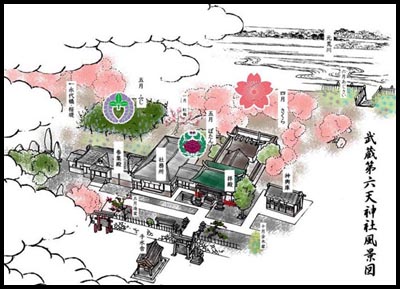
武蔵第六天神社 Shrine Dairokuten Jinja


埼玉県さいたま市岩槻区大戸1752
source : www.dairokuten.or.jp

Annual Festivals:

1月1日 - 歳旦祭 New Year Festival
2月3日 - 節分祭 Setsubun
4月1日~5月31日 - 観花祭(第六天講社大祭)
6月30日 - 夏越大祓 summer purification
7月14日 - 御神幸祭 Ritual for the Shrine Deity
7月15日 - 例大祭 Great Annual Festival
8月13日~8月16日 - 夏期慰霊祭 Rituals for the Dead
11月1日~11月30日 - 七五三祭 Shichi-Go-San for children
12月31日 - 大祓 great purification ritual

毎月1日月次祭 monthly rituals on the first day


天狗様は、第六天神社の御使役として、
諸々の心願を叶える仲立ちをされています。古来より当社に伝わる向かい天狗の絵馬は、火難・盗難・疫病を除き、邪気を祓い、以って家内安全・商売繁昌・五穀豊穣等に霊験著しい護符であります.
source : www.dairokuten.or.jp - tengu amulets


:::::::::::::::::::::::::::::::::::::::::::::::::::::::::::::::::::::::::::::::::::::::::::::::::::::::::::::::::::::::::::::::::::::::::::::::::::::::::::::::::::::::::::


This old ema is 92 cm wide and 68 cm high.
It dates from around 1624 - 1644, the time of Tokugawa Shogun Iemitsu.

From shrine Nagamiya Hikawa Jinja 長宮氷川神社
Kamifukuoka shi town 上福岡市

source : www.nagamiya-hikawa

:::::::::::::::::::::::::::::::::::::::::::::::::::::::::::::::::::::::::::::::::::::::::::::::::::::::::::::::::::::::::::::::::::::::::::::::::::::::::::::::::::::::::::


. . . CLICK here for Photos !

. Reference .

:::::::::::::::::::::::::::::::::::::::::::::::::::::::::::::::::::::::::::::::::::::::::::::::::::::::::::::::::::::::::::::::::::::::::::::::::::::::::::::::::::::::::::


Fuji Tengu 富士天狗(富士太郎)Tengu from Mount Fuji
Daraniboo, Daranibō 陀羅尼坊 Darani-Bo, Daranibo


This is the most important of all the Tengu goblins from Japan.
In Gotenba town, he is called "Fuji Taro".
This amulet is sold at the Tengu shrine at the 5th station of Mount Fuji as proof that its owner has climbed the mountain.
It is an amulet for easy childbirth (because of the female aspect of the Fuji deity), but also for strong family bonds, a good harvest of fields and sea and safe travel.

Darani-Bo is one of the
. 四十八天狗 48 Tengu of Japan .

. WKD : Mount Fuji 富士山, Fuji-san, or Fujiyama .


:::::::::::::::::::::::::::::::::::::::::::::::::::::::::::::::::::::::::::::::::::::::::::::::::::::::::::::::::::::::::::::::::::::::::::::::::::::::::::::::::::::::::::


source : zenmaitarow

Tengu Kokeshi 天狗 こけし wooden dolls
The two on the left are like totem poles.
The middle one is from mount Myoogisan 妙義山, Myogisan Gunma.


. . . CLICK here for more Photos !

..............................................................................................................................................


An old man has a lump or tumor on his face. In the mountains he encounters a band of tengu making merry and joins their dancing. . . .
. "The Old Man's Lump Removed" (瘤取り爺さん Kobu-tori Jiisan) .


- #tenguamulets -
:::::::::::::::::::::::::::::::::::::::::::::::::::::::::::::::::::::::::::::::::::::::::::::::::::::::::::::::::::::::::::::::::::::::::::::::::::::::::::::::::::::::::::

. Regional Folk Toys from Saitama .

. Tengupedia - 天狗ペディア - Tengu ABC-List .


. Tohoku after the BIG earthquake March 11, 2011

[ . BACK to WORLDKIGO . TOP . ]
[ . BACK to DARUMA MUSEUM TOP . ]
:::::::::::::::::::::::::::::::::::::::::::::::::::::::::::::::::::::::::::::::::::::::::::::::::::::::::::::::::::::::::::::::::::::::::::::::::::::::::::::::::::::::::::

9/29/2011

Nezumi Rat - INFO

[ . BACK to DARUMA MUSEUM TOP . ]
- collecting legends in the comments -
:::::::::::::::::::::::::::::::::::::::::::::::::::::::::::::::::::::::::::::::::::::::::::::::::::::::::::::::::::::::::::::::::::::::::::::::::::::::::::::::::::::::::::  

Ne 子 / nezumi 鼠  Rat, Mouse

In some parts of the world, a year associated with this animal 鼠 is referred to as Year of the Mouse because the word may be translated to "rat", "mouse", or more broadly, "rodent".
. . . More in the WIKIPEDIA !

The rat / mouse is one of the 12 zodiac animals of the Asian lunar calendar.
It is therefore a well-liked animal in folk art and handicraft.

It comes as a papermachee doll, clay doll or clay bell and other materials.

Introduction

. 12 zociac animals 干支  eto, kanshi .


Read the Introduction HERE :

. Year of the Mouse 2008 .


. tsuki no nezumi 月の鼠(つきのねずみ)mouse in the moon .
kigo for all autumn

. 小机領三十三所子歳観音霊場 Kozukue Nedoshi 33 Kannon Pilgrimage .
For people born in the year of the mouse .

.................................................................................

. Daruma 「 だるま」 .
even with a Micky Mouse Daruma !

.................................................................................


nezumi no dorei 鼠土鈴 clay bells
. . . CLICK here for Photos !


Ootoyo Jinja 大豊神社 Otoyo Jinja, Kyoto
nezumi no ema 鼠絵馬 votive tablets
. . . CLICK here for Photos !

. Ootoyo Jinja 大豊神社 Shrine Otoyo Jinja, Kyoto .


nezumi no hariko 鼠張子 papermachee dolls
. . . CLICK here for Photos !

.......................................................................

Nezumi no Joodo 鼠の浄土 Nezumi No Jodo Paradise of the Mice / “Rat Jōdo”
- quote -
Once upon a time
an old man took a toasted buckwheat cake with him to his garden patch when he went to dig.
While he was digging a rat came out cautiously. The old man broke off half of his cake and gave it to the rat.
It picked it up and crawled back into its hole.
The rat came out again, and the old man gave him some of his cake again. He picked it up and went back into its hole.
Then the father rat came out and thanked the old man.
He invited him to his house. The old man closed his eyes as he was told and followed the rat. He found himself in a splendid parlor.
The children that he had seen before came out and thanked him. He was given a fine feast.
When he started to leave, they gave him money.
The old man next door tried to imitate him. He took a toasted buckwheat cake to his garden patch to dig. He gave some of his cake to the little rats and was invited to their home.
While he was eating, he saw rats put gold into a mortar. As they pounded it, they sang, “We don’t want to hear a cat’s voice!”
The old man wanted the gold, so he imitated a cat. All the rats ran away, and the place became pitch dark. The old man looked around and found himself in his own garden patch with his head stuck into a rat hole.
- source : publish.iupress.indiana.edu/ ... -

:::::::::::::::::::::::::::::::::::::::::::::::::::::::::::::::::::::::::::::::::::::::::::::::::::::::::::::::::::::::::::::::::::: 


source : shion-senba.com/hariko01

nezumi no yome-iri ねずみの嫁入り wedding of the mice

The mouse as a symbol for easy childbirth and prosperity of the family. This couple is a present for a wedding with the wish for a long family line.

::::::::::::::::::::::::::::::::::::::::::::::::::::::::::::::::::::::::::::::::::::::::::::::::::::::::::::::::::::::::::::::::::::  

ABC - List of Zodiac Animal Toys from the Prefectures

.................................................................................................................................................................

Hiroshima

Miharu

福だるまと干支ねずみ Daruma with mouse


Miyajima

kotsuchi nori nezumi 小槌乗りねずみ mouse on a lucky mallet

.................................................................................................................................................................


Ishikawa
Kanazawa town

kome kui nezumi 米喰鼠 / 米食いねずみ mouse eating rice
The stamp dates back to 1960.
It relates back to the great famine of Tenpoo 天保 1832 - 1839, when hungry workers began to make it and sell it for a bit of money or exchange for food.
It is a small mechanical doll, with a wooden mouse on a board and a piece of bamboo as spring. When you touch it, the mouse lowers its head and begins to "eat" the rice grain - kotsu kotsu コツコツ ... just as money will increase "bit by bit".

Farmers made this toy with the wish for a good harvest, to have enough rice to eat their fill. If you keep this mouse happy, money will come to your home too.

. Famines in Japan .


.................................................................................................................................................................


Kagoshima

komekura nezumi 米倉ねずみ mouse in a rice barn
薩摩首人形


.................................................................................................................................................................

Miyagi
Sendai, Tsutsumi Ningyo 堤人形


toogarashi nori nezumi 唐辛子乗りねずみ mouse on a red pepper


kabu nori nezumi 蕪乗りねずみ mouse on a radish


.................................................................................................................................................................


Nagano

Fukutoku 福徳十二支土鈴 clay bell with zodiac animal
奈良井土鈴 


.................................................................................................................................................................


Okayama

Kurashiki hariko 倉敷張り子 papermachee dolls

oyako nezumi 親子鼠 mother and child mouse.
The mother holds a piece of gold (koban) in her mouth. They are on wheels.

Tsuyama clay bells 津山土鈴

mouse performing sumo wrestling 鼠の相撲

The mouse of the home of a Grandfather and a long-living elder performed sumo wrestling. The mouse of Grandfather won the bout and money kept assembling in his home.


This is a well-loved legend in Okayama and subject to paintings and children's books.

..................................................................................................................................................................


Shiga

kotsuchi nori nezumi 小槌乗りねずみ mouse on a lucky mallet
Obata ningyoo 小幡人形


Shimane
. fuku nezumi 福鼠 lucky mouse / rat .
and the deity Daikoku Ten 大黒天


Yamanashi
Kofu town 甲府市

十二支招福土鈴 clay bell with zodiac animal


:::::::::::::::::::::::::::::::::::::::::::::::::::::::::::::::::::::::::::::::::::::::::::::::::::::::::::::::::::::::::::::::::::::::::::::::::::::::::::::::::::::::::::  


. tsurushibina つるし雛 / 吊るし雛 small hanging hina dolls .


tawara nezumi 俵ねずみ mouse on a straw bag (filled with rice)

As a messenger of the deity Daikoku the mouse sits on his auspicious rice bags.
With the wish that the girl may be fertile in marriage and have many children. The straw bag carries the wish that there will always be food on the table of the family.

. Daikoku Ten 大黒天 .


. nezumi nori tawara ushi ネズミ乗り俵牛 cow with rice bundles and a rat .
Obata deko 小幡でこ Obata doll, Shiga


:::::::::::::::::::::::::::::::::::::::::::::::::::::::::::::::::::::::::::::::::::::::::::::::::::::::::::::::::::::::::::::::::::::::::::::::::::::::::::::::::::::::::::  


Reference
source : eto stamps

- tba -
附馬牛土人形 茄子乗り鼠 Iwate
八橋土人形 俵乗り鼠 Akita, Yatsuhashi tsuchi ningyoo
今戸土人形 俵担ぎ鼠 Tokyo
船渡張り子 とうなす鼠 Saitama
きびがら細工 鼠 Tochigi
まわり鼠(愛知県)Aichi
奈良井のからくり玩具 びっくり鼠 Nagano
木版手染めぬいぐるみ 子 Gifu
伏見土人形 蔵ねずみ貯金玉 Kyoto
猫と鼠(大阪府) Osaka
伊勢神宮御神木一刀彫 Mie
土佐土人形 親子鼠 Kochi, Tosa tsuchi ningyo
高松張り子 大黒様と白鼠 Kagawa
古型博多土人形 鼠大黒 Fukuoka
のごみ土人形 鼠鈴 Saga, Nogomi
杵島山一刀彫 鼠 Saga, Kishimayama


:::::::::::::::::::::::::::::::::::::::::::::::::::::::::::::::::::::::::::::::::::::::::::::::::::::::::::::::::::::::::::::::::::::::::::::::::::::::::::::::::::::::::::  


. Nezumi Fudo . 鼠不動 . Mouse Fudo .
At a temple in Meguro (Tokyo) and in Tokushima.


. gray, grey, grau, nezumi-iro 鼠色 .
hundred shades of grey, Edo Hyaku nezu 江戸百鼠.

..............................................................................................................................................


The Tale of the Mouse's Wedding

- to read at Gutenberg -

:::::::::::::::::::::::::::::::::::::::::::::::::::::::::::::::::::::::::::::::::::::::::::::::::::::::::::::::::::::::::::::::::::::::::::::::::::::::::::::::::::::::::::


- - - - - Legends about the mice and rats ねずみ / ネズミ - - - - -

. Iwabana no nezumi 岩鼻のねずみ the mice from Iwabana . - Nagano, river 千曲川 Chikumagawa

. nezumi ishi 鼠石 stone with a mouse pattern .

. Oonezumi 大鼠 the Big Rat - Iwate.

. shironezumi 白鼠 the white mouse from 住吉神社 Sumiyoshi Shrine . - Osaka

- collecting more in the comments !

:::::::::::::::::::::::::::::::::::::::::::::::::::::::::::::::::::::::::::::::::::::::::::::::::::::::::::::::::::::::::::::::::::::::::::::::::::::::::::::::::::::::::::   


Amulets and O-Mamori
. 12 Zociac animals 干支  eto, kanshi .


. Regional Folk Toys from Japan .

. kotowaza 諺 / ことわざ idioms, sayings, proverbs .

. Tohoku after the BIG earthquake March 11, 2011

[ . BACK to WORLDKIGO . TOP . ]
[ . BACK to DARUMA MUSEUM TOP . ]
- #nezumi #ratnezumi #mouse #mice #maus #shironezumi -
:::::::::::::::::::::::::::::::::::::::::::::::::::::::::::::::::::::::::::::::::::::::::::::::::::::::::::::::::::::::::::::::::::::::::::::::::::::::::::::::::::::::::::