- - ABC-INDEX - -

Showing posts with label luck. Show all posts

5/08/2012

Kaeru Frog Amulet

[ . BACK to DARUMA MUSEUM TOP . ]
:::::::::::::::::::::::::::::::::::::::::::::::::::::::::::::::::::::::::::::::::::::::::::::::::::::::::::::::::::::::::::::::::::::::::::::::::::::::::::::::::::::::::::  


Kaeru カエル 蛙 Frog Amulet - Frosch

There are many types of frogs and toads on our planet. And for haiku friends, the frog lives on a special podest because of Basho and his "old pond" haiku.

The word for frog is pronounced "kaeru."
It is a pun with the word "return home."
Therefore travelers carry a small frog amulet with the intent of returning safely to their family.

. WKD - Frog (kawazu, kaeru) .


source : facebook


. Handmade Frog Amulet .

:::::::::::::::::::::::::::::::::::::::::::::::::::::::::::::::::::::::::::::::::::::::::::::::::::::::::::::::::::::::::::::::::::::::::::::::::::::::::::::::::::::::::::


蛙の親子がついている交通安全などのお守り。
amulet for two for traffic safety

The name of the owner can be imprinted.
source : www.omamoriema.jp


.Traffic Safety Talisman :: Kootsuu Anzen
交通安全 お守り .


:::::::::::::::::::::::::::::::::::::::::::::::::::::::::::::::::::::::::::::::::::::::::::::::::::::::::::::::::::::::::::::::::::::::::::::::::::::::::::::::::::::::::::


fuku no mutsu kaeru 福を六蛙 take home six frogs for good luck


a pun with "six frogs" mutsu kaeru 六蛙 mu kaeru -
迎える mukaeru - to welcome to your home

All kinds of FROG goods:
source : www.frogs-shop.com


mukaeru 六蛙(むかえる)six frogs for good luck


source :www.omochokin.com/product

. . . CLICK here for Photos !

::::::::::::::::::::::::::::::::::::::::::::::::::::::::::::::::::::::::::::::::::::::::::::::::::::::::::::::::::::::::::::::::::::::::::::::::::::::::::::::::::::::::::: 


zeni kaeru 銭蛙 money coming back to you

財運をアップさせるカエル
source : www.koushoutoku.com

:::::::::::::::::::::::::::::::::::::::::::::::::::::::::::::::::::::::::::::::::::::::::::::::::::::::::::::::::::::::::::::::::::::::::::::::::::::::::::::::::::::::::::

kaeru ishi かえる石 / カエル石 / 蛙石 stone frog
often in a Shinto Shrine to pray for the safe return of someone.


かえる石 - at the Shrine 堀越神社 Horikoshi Jinja

Prince Shotoku established this shrine in memory of his father, the 32nd emperor of Japan.
Horikoshi is one of Shitennoji's seven shrines in Osaka.
"The god of Horikoshi will grant you a once in a lifetime wish."
- reference source : horikoshijinja.or.jp... -


:::::::::::::::::::::::::::::::::::::::::::::::::::::::::::::::::::::::::::::::::::::::::::::::::::::::::::::::::::::::::::::::::::::::::::::::::::::::::::::::::::::::::::


- ABC - List of Frog amulets from the Prefectures

.................................................................................
. . . . . . . . . . Mie 三重県

. Futami no kaeru 二見の蛙 frog from Futami .
Shrine Futami Okitama Jinja 二見興玉神社 and Sarutahiko 猿田彦大神


.................................................................................
. . . . . . . . . . Shiga


source : miyagemon

migawarigaeru, migawari kaeru 身代わり蛙 frog taking on our misfortune and eye disease
from temple Jizo-In 木之本地蔵
Nagahama town 長浜市

This cute frog is giving you a wink!

The Buddha of this temple is known for healing eye diseases.
Me no Hotokesama 目の仏様.

Once upon a time, there lived a frog in the temple compound, who saw countless patients with eye diseases come visiting and praying for a cure.
"Is there anything I could do to help them?" he asked himself.
Then he made this vow:
"I will close one of my eyes to experience their pain and
will ask the divine grace and help of Jizo Bosatsu
to cure their diseases."


When all people are cured from eye diseases, this frog will open his eye again.


The statue of Jizo is an important cultural treasure at the temple and not shown to people. But there is a similar large statue of 6 meters in the compound, one of the three large Jizo statues of Japan.
At its feet are countles figures of the little frog, offered with the wish to be cured.


Ema votive tablet from the temple


The "Jizo Festival" 地蔵縁日 Jizo Ennichi Matsuri
August 22 to 25


Kinomoto Jizo 木之本地蔵

HP of the temple 木之本地蔵院
http://www.kinomoto-jizo.com/


Look at many photos
source : photoguide.jp


- English Reference


. Amulets for Eye Disease .
ganbyoo chiyu kigan 眼病治癒祈願
prayer for healing of eye disease


.................................................................................

. . . . . . . . . . Tokyo


buji kaeru 無事帰る come back home safely
shrine Kanda Myojin 神田明神


. Kanda Myoojin Shrine 神田明神 .


:::::::::::::::::::::::::::::::::::::::::::::::::::::::::::::::::::::::::::::::::::::::::::::::::::::::::::::::::::::::::::::::::::::::::::::::::::::::::::::::::::::::::::


- - - - frog patterns in Japanese art - - -


from Kutaniyaki pottery

. . . CLICK here for Photos !

. Reference .


.......................................................................................................................................................


such pious frogs
to bring you luck and money -
namu amida


.............................................................................................................................................


frog line-up
Basho takes a peek
at Yahoo


yahoo auctions are always a good source for kokeshi.

. Kokeshi, Wooden Dolls こけし, .


::::::::::::::::::::::::::::::::::::::::::::::::::::::::::::::::::::::::::::::::::::::::::::::::::::::::::::::::::::::::::::::::::::::::::::::::::::::::::::::::::::::::::: 

. Regional Folk Toys from Japan .

. Tohoku after the BIG earthquake March 11, 2011

:::::::::::::::::::::::::::::::::::::::::::::::::::::::::::::::::::::::::::::::::::::::::::::::::::::::::::::::::::::::::::::::::::::::::::::::::::::::::::::::::::::::::::

[ . BACK to WORLDKIGO . TOP . ]
[ . BACK to DARUMA MUSEUM TOP . ]
- #frogkaeru #kaerufrog -
:::::::::::::::::::::::::::::::::::::::::::::::::::::::::::::::::::::::::::::::::::::::::::::::::::::::::::::::::::::::::::::::::::::::::::::::::::::::::::::::::::::::::::

5/02/2012

Owari Four Kannon Temples

[ . BACK to DARUMA MUSEUM TOP . ]
::::::::::::::::::::::::::::::::::::::::::::::::::::::::::::::::::::::::::::::::::::::::::::::::::::::::::::::::::::::::::::::::::::  


Owari shi Kannon 尾張四観音 - The Four Kannon Temples of Owari

They were erected in the auspicious directions to protect the castle of Nagoya from evil influence.


source : hitodegoya.blog55.fc2.com

You visit the one of the auspicious direction of the year, and then continue as shown in the illustration above.

Deity of the auspicious direction (ehoo 恵方)
. God of the year, toshigami 年神(としがみ) .

:::::::::::::::::::::::::::::::::::::::::::::::::::::::::::::::::::::::::::::::::::::::::::::::::::::

愛知県名古屋市中川区荒子町の
荒子観音 Arako Kannon

quote
Arako Kannon is one of the four major Kannon temples in the Owari region. This is a temple of the Tendai sect of Buddhism named Kannonji. It is famous for about 1200 Buddhist statues made by Enku in the site. It was established in 729 and repaired in 1576 by the lord of Kaga, Maeda Toshiie. Its tahoto pagoda was repaired in 1536. The pagoda is the oldest wooden building in Nagoya and is registered as a cultural asset of national importance.
source : www.ncvb.or.jp

quote
It was established by a monk, Taichou-Taishi. in 729.
The main temple had destroyed by a fire many times and rebuilt again of each time.
The latest fire broke out in 1994 and rebuilt 1997.
But the two story pagoda called Tahouto has been kept since the last construction in 1536.
This is the oldest wooden structure in Nagoya City.


In Arako Kannon, they have approximately 1240 images of Budda carved by Enkuu (1632-1696).
We can view them in the afternoon of the 2nd Saturday every month.
Enkuu is a very famous monk who traveled to many places in Japan, from Hokkaido to Shikoku and Kyushu, and carved so many images of Buddha so called Enku-butsu.
He was close to the 10th monk of Arako-Kannon, Ensei.
Maybe, that is why he left such a large number of the images of Buddha there.

138 Miyamado, Arako-cho, Nakagawa-ku, Nagoya
source : kikuko.web.infoseek.co.jp


quote
by James F. Goater, 2009
Nagoya's oldest building: Arako Kannon
When the famed Buddhist monk, and compulsive wood-carver, Enku ,took up residence at the Arako Kannon temple (Kannonji, in today’s Nakagawa Ward) in 1676, this venerable temple was already over 900 years old, having been established in the early Heian period of the 8th century. Housing one of the region’s most important Kannon (Goddess of Mercy) statues, Arako Kannon has retained its pre-eminence in the district to the present day.

Of additional interest is the fact that of the various structures on-site when Enku arrived, one is still in existence. The two-tiered Tahoto (treasure) Pagoda had already been standing for 140 years in 1676, and it is still there in 2008 – a Muromachi Period building designated as a national cultural asset, and by far the city’s oldest structure.

Records indicate that, in 1536, the pagoda was rebuilt by local carpenters, partially from materials from an earlier structure on the same site. Despite the periodic fires which have devastated most temples at one time or another during their histories – as recently as 1994 the main temple building of Kannonji was destroyed by fire – the Tahoto Pagoda has so far remained safe from this scourge for 472 years!

During his residence in the temple, Enku completed around one thousand wooden figures, ranging in size from a few centimeters to the huge 3 meter figures which act as temple guardians, situated in the temple’s main gate. Most of these figures, however, were lost to history from the time immediately after Enku’s departure. Amazingly, it was 300 years before they were found – nestling in carefully-packed boxes, covered in dust, located in a recess within the Tahoto Pagoda. In 1972, Arako Kannon’s then chief priest opened these ancient boxes and made the discovery. A museum was set up within the temple precincts soon after, containing 1,255 wooden figures. It is worth a visit, as is the oldest building in Nagoya nearby.
source : www.centraljapan.jp


. Enku, the Master Carver 円空 (Enkuu) .
[1632?~1695]

:::::::::::::::::::::::::::::::::::::::::::::::::::::::::::::::::::::::::::::::::::::::::::::::::::::

愛知県あま市甚目寺の
甚目寺観音 Jimokuji Kannon

quote
Chizan Sect of Shingon School
Established in A.D. 597


Jimoku-ji means Jimoku Temple and Kannon is a Goddess of Mercy.
In the Asuka period (552-710), A fisherman called Tatsumaro, who lived in Jimoku Villege,
found a golden image of Kannon (Goddess of Mercy) in his fishing net at 200m-southeast from the present temple.
Then he built a thatched roof hut and enshrined it in 597.
This is the beginning of this temple.
Then Jimokoji Kannon is the foremost oldest temple following with
Hoko-ji or Asuka-dera or Gango-ji (A.D.592) and Shitenno-ji (A.D.593).
We can view he image of Kannon once in every 50 years.
The last exhibition was held on Nov.18 to 25 in 2001.

24 Aza Higashi-Monzen, Oaza Jimokuji, Jimokuji-cho, Ama-gun

source : kikuko.web.infoseek.co.jp

:::::::::::::::::::::::::::::::::::::::::::::::::::::::::::::::::::::::::::::::::::::::::::::::::::::

愛知県名古屋市守山区龍泉寺の
龍泉寺観音 Ryusenji Kannon
Ryuusenji 龍泉寺 Ryusen-Ji "Dragon Fountain Temple"


松洞山大行院
Tendai sect
The main deity is Bato-Kannon, the Horse-Headed Kannon.
1-902 Ryusenji, Moriyama-ku, Nagoya C.

Legend knows that this temple had been built by the Dragon Deity in just one night.
When priest Dengyo Daishi visited here on his way to the shrine Atsuta Jingu, he had a vision. When he recited sutras at the Tatara pond 多々羅池, the Dragon Deity appeared and made its way to heaven, and the statue of a horse-headed Kannon appeared, now the main deity at this temple.

The temple is located on a hill overlooking the river Shonaigawa 庄内川 and has a wonderful look down on the Nobi plain 濃尾平野.
source : www.ryusenji.com/

Ryuusenji no kubi uma 竜泉寺首馬
horse head from temple Ryusen-Ji

kushiuma, kushi uma 串馬
. takeuma, take uma 竹馬 "bamboo horse" stilts .

usually a pair in red and white. A papermachee head is placed on a bamboo stick.


The white horse wards off evil at a ceremony of the imperial court 白馬節会 (Aouma no sechi-e) and this is a local reminder.
It is made from paper (hariko) and as a pun HARI is read as HARU, harukoma 春駒 horse of spring.
In former times horses were of utmost importance to the people.
Now people buy this horse at the New Year for good luck.

. Aichi Folk Art - 愛知県 .

:::::::::::::::::::::::::::::::::::::::::::::::::::::::::::::::::::::::::::::::::::::::::::::::::::::

Ryuufukuji 真言宗天林山笠覆寺 Ryufuku-Ji, short "Kasadera"
Ryuufukuji 笠覆寺観音 Ryufukuji Kannon
Kasadera Kannon 笠寺観音 "Kannon at the Rain Hat Temple"
愛知県名古屋市南区笠寺町の

quote
Ryufuku-ji temple
Shingon sect, founded by priest Zenko.


In January 1814, a statue of Juichimen-Kannon (Eleven-faced Goddess of Mercy)
was found from the ground of Kasadera-Kannon precincts. It became a big news and people came to pray or just to have a look at it. It was a kind of turmoil and the temple had been crowded day after day like festivals.

There is also a famous statue of Fudo Myo-O 不動明王 venerated.
A Fudo Market Fair is held on the 18th and 28th each month.

With more old illustrations
source : kikuko.web.infoseek.co.jp

This temple is dedicated to the memory of the beautiful Princess Tamateru Hime 玉照姫, who had been taken by a rich man from Narumi and lived in great misfortune.
Day and night she prayed to a stone statue Kannon. One day with a heavy rainfall, she put her own straw rain hat on the statue to protect her.
By chance Fujiwara no Kanehira 藤原兼平  (875 - 935), came by on this day and saw her.
Her luck changed and she married Kanehira, still praying to the Kannon statue with the straw hat.
Thus she could begin to rebuild the temple.

Now there are amulets in memory of this finding a good partner (enmusubi 縁結び).


縁結び御守り


source : omamorida.com


Matsuo Basho was impressed by the story of this temple and offered this hokku as a greeting:

笠寺や漏らぬ岩屋も春の雨 
Kasa-dera ya moranu iwaya mo haru no ame

temple Kasadera !
even at the watertight grotto
the rain of spring


Written in the spring of 1687 貞亨4年春


Visiting temples with
. Matsuo Basho 松尾芭蕉 - Archives of the WKD .

:::::::::::::::::::::::::::::::::::::::::::::::::::::::::::::::::::::::::::::::::::::::::::::::::::::::::::::::::::::::::::::::::::: 

There is also a
pilgrimage to 33 Kannon temples in Owari


source : www.asahi-net.or.jp


The Owari Thirty-three Kannon Temples
(尾張三十三観音 Owari Sanjuusan Kannon)

are a collection of Buddhist temples in western Aichi Prefecture, Japan, all dedicated to the bodhisattva Avalokitesvara. The name is derived from Owari Province, the former name for the area.
The list was created in 1955.

Find the temple names here
-  More in the WIKIPEDIA !

. Ryootanji 龍潭寺 temple Ryotan-Ji .
Nr. 18 on the Owari Kannon Pilgrimage.

. Kannon Bosatsu 観音菩薩 - INFO .


:::::::::::::::::::::::::::::::::::::::::::::::::::::::::::::::::::::::::::::::::::::::::::::::::::::::::::::::::::::::::::::::::::: 

. Regional Folk Toys from Japan .

. Tohoku after the BIG earthquake March 11, 2011

[ . BACK to WORLDKIGO . TOP . ]
[ . BACK to DARUMA MUSEUM TOP . ]
- #owarikannon #kannonowari #ryotanji -

::::::::::::::::::::::::::::::::::::::::::::::::::::::::::::::::::::::::::::::::::::::::::::::::::::::::::::::::::::::::::::::::::::

4/21/2012

Goshiki suzu clay bells

[ . BACK to DARUMA MUSEUM TOP . ]
::::::::::::::::::::::::::::::::::::::::::::::::::::::::::::::::::::::::::::::::::::::::::::::::::::::::::::::::::::::::::::::::::::  


Goshiki suzu, goshiki rei 五色鈴 five-colored clay bells
goshikisuzu, goshiki rei


The concept GOSHIKI "five colors" comes from Buddhist philosphy :

. Goshiki Daruma and Color Symbols
五色だるま .


. Clay Bells どれい【土鈴】 dorei .

:::::::::::::::::::::::::::::::::::::::::::::::::::::::::::::::::::::::::::::::::::::::::::::::::::::::::::::::::::::::::::::::::::: 

- ABC - List of five-colored clay bells from the Prefectures

.................................................................................

. . . . . . . . . . Aichi Folk Art - 愛知県 

Suzaki, Susaki jinja no goshiki suzu 洲崎神社の五色鈴

The small bells come in red, yellow, blue, green and white.


source : popyah/aichi

From 16596 to 1615, whileTokugawa Ieyasu had just started to build the town of Nagoya, there was an epidemy of illness, so he ordered the head priest of the shrine to pray for the people and make these bells to ward off the bad spirits.

Therefore they are also called
"clay bells to ward off an epidemy" 疫病除洲崎神鈴 shinrei

Each one of the bells resembles the nut of a Gingko biloba tree.
The string of the bells is made of paper, with a poem written on it.

shinrei 神鈴 "bell of the Gods" sacred bell

In Mie, Kuwana 桑名市
At the shrine 国幣大社 多度神社 Tado Jinja there is a legend about the bell.
明和年間に大暴風雨で山崩れがあり、神の怒りかと住民は恐れたが、その地点から古鏡と鈴2個を掘り出したという。

- reference : nichibun yokai database -
206 Legends about all kinds of bells.

.................................................................................

Shrine Suzaki Jinja
愛知県名古屋市中区栄1丁目31-25

Deities in residence

Susano-o no Mikoto素戔鳴尊(すさのをのみこと)
Inada hime no mikoto 稲田姫命(いなだひめのみこと)
also called :
. Kushinadahime - Kushinada hime 櫛名田媛 .

The main festival in on July 13/14
Choochin matsuri 提灯祭  Lantern Festival

- quote
Susaki Shrine was founded in 860's.
This festival has been kept since in the Edo Period
At that time, this was one of the big festivals in Owari (Nagoya area).

Approximately 1,000 lanterns are displayed in the shrine yard.
Wa-kuguri (Chinowa-kuguri), Torii-kuguri and Jyunishi-mairi are also held.
- source : kikuko-nagoya.com/html


The shrine was venerated since very very olden times, as a deity of the stone resident here.


source : www.yumemusubi.com
Ishigami 石神 Stone Deity
futsumitama 布都御魂(ふつみたま)Futsu no mitama


In the Edo period, this shrine was one of the 10 big shrines of Edo Owari 江戸尾張十社, and frequented by the aristocracy and the Tokugawa shogun.

The shrine is now famous for amulets about finding a good match (enmusubi), luck with money, health, progress in studying and career for those in the entertainment business.


There is also a small shrine for the White Dragon of Long Life in the compound.
白龍龍寿大神
. . . CLICK here for Photos !

Near this shrine is the sacred Gingko tree of the compound 神木の銀杏.


More amulets of Susaki shrine :

source : www.lets-go-aichi.jp


. The Dragon Art Gallery – 2012 .


.........................................


source : leoriel/diary
Totsuka no tsurugi 十握剣(とつかのつるぎ)
and
Futsunomitama 布都御魂(ふつのみたま)


quote
Futsunomitama
Other names: Sajifutsu no kami, Mikafutsu no kami (Kojiki)

The personification of a divine sword.
At the time of Emperor Jinmu's campaign to the east, Amaterasu ordered Takemikazuchi to assist the beleaguered Jinmu, whereupon Takemikazuchi miraculously sent his divine sword Futsu no mitama to appear in the warehouse of Takakuraji in Kumano.
Takakuraji found the sword and presented it to Jinmu, whereupon Jinmu was enabled to complete his campaign. In Sendai kuji hongi, Futsu no mitama is called "Futsunushi no kami's sword of spirit," presented by Jinmu to Umashimaji as a prize for killing Nagasunehiko and submitting to the imperial forces.

It is believed to represent a divine sword worshiped by the martial clan Mononobe, who were instrumental in the early pacification of Japan, and is enshrined as the central deity (saijin) of Isonokami Jingū and other shrines.

source : Kadoya Atsushi, Kokugakuin 2005

Futsunomitama 布都御魂(ふつのみたま)
Futsumitama no tsurugi 韴霊剣、布都御魂剣(ふつみたまのつるぎ)
Sajifutsu no kami 佐士布都神(さじふつのかみ)
Mikafutsunokami 甕布都神(みかふつのかみ)


. Katana 日本刀 Japanese Swords .


.................................................................................

. . . . . . . . . . Mie Folk Art - 三重県  


Five little bells to bring you good luck.

From the shrine Miyamado Jinja 海山道神社

This shrine is dedicated to Sugawara no Michizane and has the largest statue of him as Tenjin sama. 天神様.

海山道天神菅原社
三重県四日市市海山道町1丁目62


More amulets from this shrine
source : miyamado-jinja.com


.................................................................................

. . . . . . . . . . Yamanashi Folk Art - 山梨県  


source : wcddr162

from Minobusan, Temple Kuon-Ji
身延山久遠寺  


source : popyah/yamanashi

They are related to the story of the "Lucky Dragon", who drained the water out of the plain of Kofu.
While the dragon rang the five-colored bells, the water flew out of the valley.
So dolls of the dragon and the five bells are closely related.

. Fukuryuu 福龍 lucky dragon .


:::::::::::::::::::::::::::::::::::::::::::::::::::::::::::::::::::::::::::::::::::::::::::::::::::::::::::::::::::::::::::::::::::: 


. . . CLICK here for Photos !

. Reference .


:::::::::::::::::::::::::::::::::::::::::::::::::::::::::::::::::::::::::::::::::::::::::::::::::::::::::::::::::::::::::::::::::::: 

. Regional Folk Toys from Japan .


. Tohoku after the BIG earthquake March 11, 2011

[ . BACK to WORLDKIGO . TOP . ]
[ . BACK to DARUMA MUSEUM TOP . ]

::::::::::::::::::::::::::::::::::::::::::::::::::::::::::::::::::::::::::::::::::::::::::::::::::::::::::::::::::::::::::::::::::::

12/07/2011

Atariya arrow

[ . BACK to DARUMA MUSEUM TOP . ]
::::::::::::::::::::::::::::::::::::::::::::::::::::::::::::::::::::::::::::::::::::::::::::::::::::::::::::::::::::::::::::::::::::  


Atariya 当たり矢 arrow to hit good luck

お多福・達磨・当たり矢必勝お守り


Amulet with Daruma, O-Tafuku and the hitting arrow.

Your name can be input on the top.
source : www.saninsen

:::::::::::::::::::::::::::::::::::::::::::::::::::::::::::::::::::::::::::::::::::::::::::::::::::::::::::::::::::::::::::::::::::: 

katsu 勝 to win

. Kachi mamori, kachimamori 勝守 / 勝ち守り to WIN .

The normal arrow for the new year to ward off evil is called

. Hamaya 破魔矢 arrow for the New Year .


. Arrows and Archery .


:::::::::::::::::::::::::::::::::::::::::::::::::::::::::::::::::::::::::::::::::::::::::::::::::::::::::::::::::::::::::::::::::::: 


To hit the target for archery on horseback


from OkuniTama Shrine 大国魂神社
Every year on May 5 there is a competition for archery on horseback, so their new year arrow is also for this event.


. yabusame 流鏑馬 archery on horseback .
yabusame shinji 流鏑馬神事 Yabusame shrine rituals


:::::::::::::::::::::::::::::::::::::::::::::::::::::::::::::::::::::::::::::::::::::::::::::::::::::::::::::::::::::::::::::::::::: 

To win in gambling


This is so small you can put it in your purse and hope money will double.


100 tries, 100 hits - 100発100中

for all kinds of gambling, from horse race betting to card games.


:::::::::::::::::::::::::::::::::::::::::::::::::::::::::::::::::::::::::::::::::::::::::::::::::::::::::::::::::::::::::::::::::::: 


. . . CLICK here for Photos !

. Reference .


:::::::::::::::::::::::::::::::::::::::::::::::::::::::::::::::::::::::::::::::::::::::::::::::::::::::::::::::::::::::::::::::::::: 


当り矢の余音に浸る弓始
atariya no yoin ni hitaru yumi hajime

soaked in the sound
of the winning arrow -
first archery contest


Ogasawara Hiromi 小笠原ひろみ


:::::::::::::::::::::::::::::::::::::::::::::::::::::::::::::::::::::::::::::::::::::::::::::::::::::::::::::::::::::::::::::::::::: 

. Regional Folk Toys from Japan .


. Tohoku after the BIG earthquake March 11, 2011

[ . BACK to WORLDKIGO . TOP . ]
[ . BACK to DARUMA MUSEUM TOP . ]

::::::::::::::::::::::::::::::::::::::::::::::::::::::::::::::::::::::::::::::::::::::::::::::::::::::::::::::::::::::::::::::::::::

11/17/2011

Kukai Kobo Daishi mamori

[ . BACK to DARUMA MUSEUM TOP . ]
. 弘法大師 空海 - 伝説  Kobo Daishi Kukai Legends .
::::::::::::::::::::::::::::::::::::::::::::::::::::::::::::::::::::::::::::::::::::::::::::::::::::::::::::::::::::::::::::::::::::  


Kukai Kobo Daishi
(774-835) (Kooboo Daishi, Kuukai)

Founder of Shingon  真言 Japanese Esoteric Buddhism


Read the introduction here

. Kobo Daishi, Kukai 弘法大師 空海 .


:::::::::::::::::::::::::::::::::::::::::::::::::::::::::::::::::::::::::::::::::::::::::::::::::::::


namu Daishi henjo kongo 南無大師遍照金剛

仙台 虚空蔵尊 - 大満寺
Sendai, Kokuzo Bosatsu, Temple Daimanji


:::::::::::::::::::::::::::::::::::::::::::::::::::::::::::::::::::::::::::::::::::::::::::::::::::::


namikiri Fudo 浪切不動明王 Wave-calming Fudo

From Temple Nr. 36 of the 88 henro pilgrim temples of Shikoku

. Namikiri Fudo Myo-O 浪切不動明王 .


:::::::::::::::::::::::::::::::::::::::::::::::::::::::::::::::::::::::::::::::::::::::::::::::::::::::::::::::::::::::::::::::::::: 


空海修行大師道中御守 Kukai as a student in China
from temple Kaigen-Ji in China 開元寺

source : stladys.com/oroshiuri/kukai


. 広幡山 Kobanzan 観蔵院 Kanzo-In 善應寺 Zeno-Ji . - Tokyo
with a statue of shugyoo daishi 修行大師 Shugyo Kobo Daishi during his ascetic training

:::::::::::::::::::::::::::::::::::::::::::::::::::::::::::::::::::::::::::::::::::::::::::::::::::::::::::::::::::::::::::::::::::: 


A handcarved statue for your personal use.
for 厄除け、招福 warding off evil and bringing good luck.
and for 家内安全、合格祈願、難病克服 a happy family, passing an examination and warding off illness.

made from byakudan 白檀 sandalwood

source : online shopping

::::::::::::::::::::::::::::::::::::::::::::::::::::::::::::::::::::::::::::::::::::::::::::::::::::::::::::::::::::::::::::::::::::


sango シナ海珊瑚 from Chinese sea coral
made in Tosa, Shikoku
about 5,5 cm high, to fit in a pocket

source : nishida corals

:::::::::::::::::::::::::::::::::::::::::::::::::::::::::::::::::::::::::::::::::::::::::::::::::::::::::::::::::::::::::::::::::::: 


. Gankake Daishi 願掛け大師 Kukai to make a wish .
at Kawasaki Daishi Temple 川崎大師


source : ameblo.jp/tarragon/entry

shoozuka no baasan しょうづかの婆さん "the Old Hag of Hell "
shoozuka is dialect for soozuka 三途河・葬頭河 - sanzu no kawa, the river to the other world.
Visiting this statue will cure of toothache and help become beautiful.

. Datsueba, the Old Hag of Hell / 三途の婆 sanzu no baba .


. biyoo jisha 美容寺社 praying for beauty .

:::::::::::::::::::::::::::::::::::::::::::::::::::::::::::::::::::::::::::::::::::::::::::::::::::::::::::::::::::::::::::::::::::: 


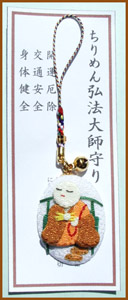
chirimen ちりめん弘法大師 made from crepe silk


with more keyholders of chirimen
source : tensho/keyhorder


::::::::::::::::::::::::::::::::::::::::::::::::::::::::::::::::::::::::::::::::::::::::::::::::::::::::::::::::::::::::::::::::::::


Kobo Daishi, Wood Statue


Statue of seated Kōbō Daishi holding a vajra in right hand and a prayer ring in the left. The vajra is a fundamental icon of Shingon Buddhism -- Japan's version of Vajrayana (Tantric) Buddhism. The vajra is a symbolic weapon that represents a thunderbolt (irresistible force) and indestructibility (it can cut any substance but not be cut itself, like a diamond). It thus represents spiritual power. Vajra in Sanskrit means diamond (lit. adamantine, unsplittable), while yana means vehicle. Vajrayana is thus translated as "The Diamond Vehicle." This splendid carving is a reproduction of the most common and traditional artistic depiction of Kōbō Daishi in Japan.

For more on Kōbō Daishi, please see:

source : Mark Schumacher

:::::::::::::::::::::::::::::::::::::::::::::::::::::::::::::::::::::::::::::::::::::::::::::::::::::::::::::::::::::::::::::::::::: 


Kuukai Yakuyoke 空海 厄除け to ward off evil


Kukai O-Mamori 空海 お守り


. . . CLICK here for Photos !


Japanese Reference with all the HENRO pilgrims goods and amulets:
Reference : eitikai.co

::::::::::::::::::::::::::::::::::::::::::::::::::::::::::::::::::::::::::::::::::::::::::::::::::::::::::::::::::::::::::::::::::::


Daishi Senbei 大師せんぺい rice crackers

Kukai as a pilgrim in Shikoku

. Shikoku Henro 四国遍路 Information .


. Kawasaki Daishi 川崎大師 .
平間寺 Temple Heiken-ji


. 弘法大師 空海 - 伝説  Kobo Daishi Kukai Legends .


:::::::::::::::::::::::::::::::::::::::::::::::::::::::::::::::::::::::::::::::::::::::::::::::::::::::::::::::::::::::::::::::::::: 

. Regional Amulets and Talismans from Japan .


. Tohoku after the BIG earthquake March 11, 2011

[ . BACK to WORLDKIGO . TOP . ]
[ . BACK to DARUMA MUSEUM TOP . ]

::::::::::::::::::::::::::::::::::::::::::::::::::::::::::::::::::::::::::::::::::::::::::::::::::::::::::::::::::::::::::::::::::::